2025-12-08 パデュー大学
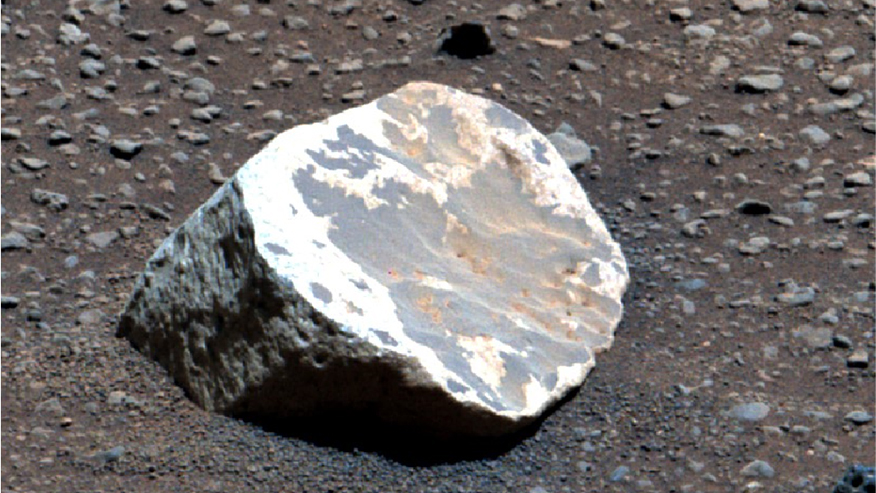
Purdue University research into scattered kaolinite rocks on Mars’ surface shows the dry, dusty planet could have featured a rain-heavy climate billions of years ago. (Photo provided by NASA)
<関連情報>
- https://www.purdue.edu/newsroom/2025/Q4/findings-suggest-red-planet-was-warmer-wetter-millions-of-years-ago/
- https://www.nature.com/articles/s43247-025-02856-3
火星ジェゼロクレーターのアルミニウムを豊富に含む岩石の変質史 Alteration history of aluminum-rich rocks at Jezero crater, Mars
A. P. Broz,B. H. N. Horgan,C. Bedford,C. Royer,H. Manelski,S. Connell,R. C. Wiens,E. C. Cardarelli,J. M. Madariaga,L. Mandon,A. Klidaras,M. Bramble,B. Kathir,O. Forni,John Carter,E. Dehouck,C. Quantin-Nataf,J. R. Johnson,J. I. Nuñez,E. Hausrath,U. Wolf,E. A. Cloutis,P. Beck,J. F. Bell,… A. Cousin
Communications Earth & Environment Published:01 December 2025
DOI:https://doi.org/10.1038/s43247-025-02856-3
Abstract
Aluminum-rich clay minerals are detected across the ancient surface of Mars and record intervals of intense alteration by liquid water. On Earth, these clay minerals can form from hydrothermal alteration or rainfall-driven chemical weathering over thousands to millions of years, but how they formed on Mars remains a mystery. The Perseverance rover discovered light-toned, cobble-sized, aluminum-rich (30-45 wt% Al2O3) “float” rocks (rock fragments), with some exhibiting spectral signatures of kaolinite, an aluminum-rich clay mineral. These rocks now enable an investigation into the ancient kaolinite-bearing terrains of Mars. To interpret their formation, we use data from the SuperCam and Mastcam-Z instruments onboard the rover to compare the chemistry and reflectance spectra of the float rocks with deeply weathered paleosols and hydrothermal kaolin deposits from Earth’s geological record. Aluminum and titanium enrichments coupled with depletion of iron and magnesium are unlike hydrothermal deposits and instead comparable to bleached horizons of paleosols that formed under high rainfall during past greenhouse climates on Earth. These rocks therefore likely represent some of the wettest intervals of Mars’ history.