2025-09-25 パシフィック・ノースウェスト国立研究所(PNNL)
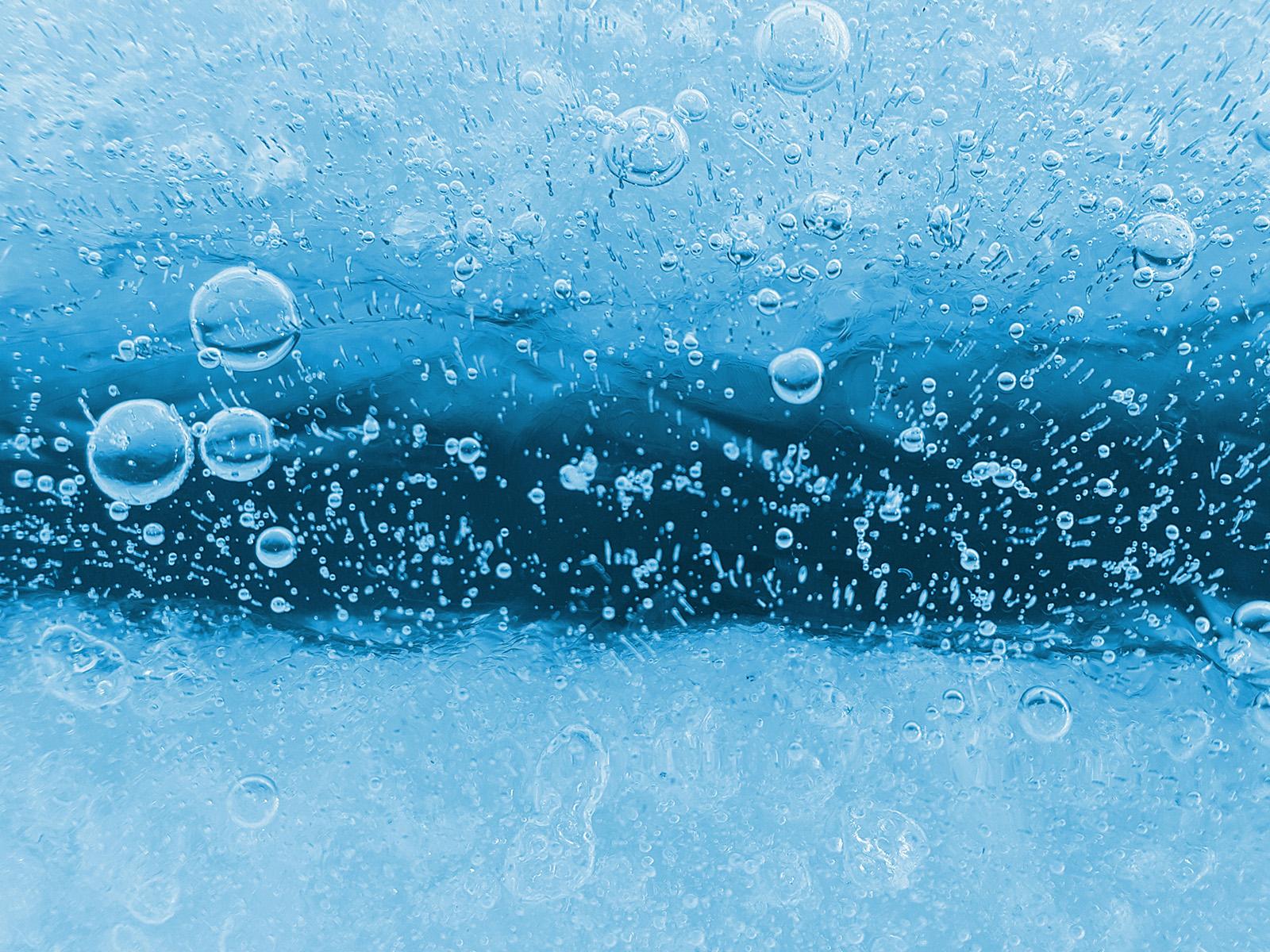
Ice often traps air bubbles when it freezes. New research at the atomic nanoscale shows why. Ice is surprisingly flexible and adaptable to trapped air bubbles, which don’t cause strain that might cause cracks in the crystal structure.
(Photo by ArTDi101 | Shutterstock.com)
<関連情報>
- https://www.pnnl.gov/news-media/chilling-discovery-surprising-flexibility-ice
- https://www.nature.com/articles/s41467-025-62451-0
極低温液体セルTEMによる液体水から結晶化した氷の分子分解能画像化 Molecular-resolution imaging of ice crystallized from liquid water by cryogenic liquid-cell TEM
Jingshan S. Du,Suvo Banik,Henry Chan,Birk Fritsch,Ying Xia,Ajay S. Karakoti,Andreas Hutzler,Subramanian K. R. S. Sankaranarayanan & James J. De Yoreo
Nature Communications Published:25 September 2025
DOI:https://doi.org/10.1038/s41467-025-62451-0
Abstract
Despite the ubiquity of ice, a molecular-resolution image of nanoscopic defects or microstructures in ice crystallized from liquid water has never been obtained. This is mainly due to the difficulties in preparing and preserving crystalline ice samples that can survive under high-resolution imaging conditions. Here, we report the stabilization and Å-resolution electron imaging of ice Ih crystallized from liquid water by developing cryogenic liquid-cell transmission electron microscopy (CRYOLIC-TEM). We combine lattice mapping with molecular dynamics simulations to reveal that ice formation is highly tolerant to nanoscale defects such as misoriented subdomains and trapped gas bubbles, which are stabilized by molecular-scale structural motifs. Importantly, bubble surfaces adopt low-energy nanofacets and create negligible strain fields in the surrounding crystal. These bubbles can dynamically nucleate, grow, migrate, dissolve, and coalesce under electron irradiation and be monitored in situ near a steady state. This work improves our understanding of water crystallization behaviors at a molecular spatial resolution.