
2025-09-10 インペリアル・カレッジ・ロンドン(ICL)
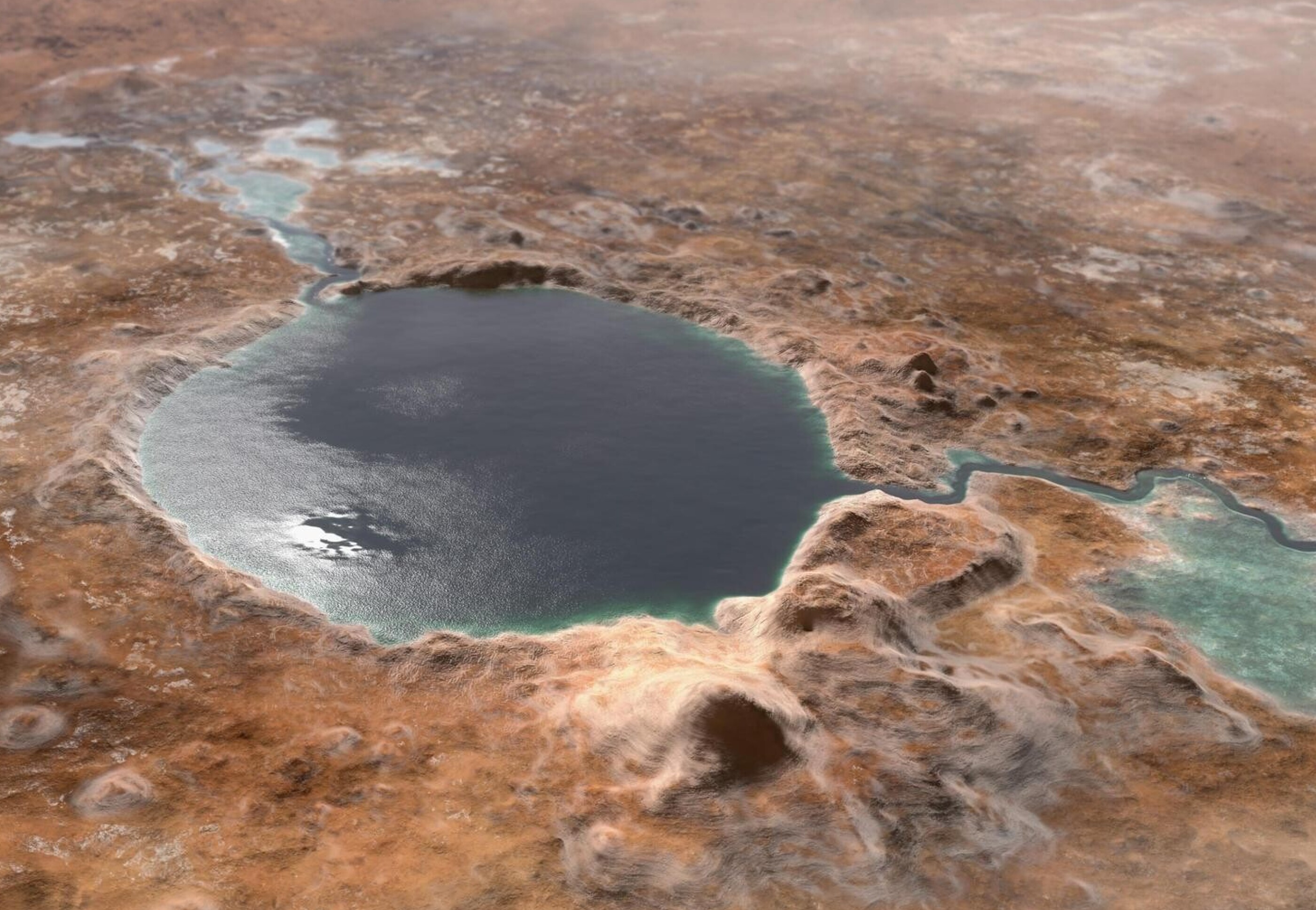 Jezero Crater on Mars where tantalising ‘biosignatures’ have been found
<関連情報>
- https://www.imperial.ac.uk/news/268353/potential-biosignatures-found-ancient-mars-lake/
- https://www.nature.com/articles/s41586-025-09413-0
火星ジェゼロ・クレーターにおける酸化還元駆動型鉱物・有機物複合体 Redox-driven mineral and organic associations in Jezero Crater, Mars
Joel A. Hurowitz,M. M. Tice,A. C. Allwood,M. L. Cable,K. P. Hand,A. E. Murphy,K. Uckert,J. F. Bell III,T. Bosak,A. P. Broz,E. Clavé,A. Cousin,S. Davidoff,E. Dehouck,K. A. Farley,S. Gupta,S.-E. Hamran,K. Hickman-Lewis,J. R. Johnson,A. J. Jones,M. W. M. Jones,P. S. Jørgensen,L. C. Kah,H. Kalucha,… Z. U. Wolf
Nature Published:10 September 2025
DOI:https://doi.org/10.1038/s41586-025-09413-0
Abstract
The Perseverance rover has explored and sampled igneous and sedimentary rocks within Jezero Crater to characterize early Martian geological processes and habitability and search for potential biosignatures1,2,3,4,5,6,7. Upon entering Neretva Vallis, on Jezero Crater’s western edge8, Perseverance investigated distinctive mudstone and conglomerate outcrops of the Bright Angel formation. Here we report a detailed geological, petrographic and geochemical survey of these rocks and show that organic-carbon-bearing mudstones in the Bright Angel formation contain submillimetre-scale nodules and millimetre-scale reaction fronts enriched in ferrous iron phosphate and sulfide minerals, likely vivianite and greigite, respectively. This organic carbon appears to have participated in post-depositional redox reactions that produced the observed iron-phosphate and iron-sulfide minerals. Geological context and petrography indicate that these reactions occurred at low temperatures. Within this context, we review the various pathways by which redox reactions that involve organic matter can produce the observed suite of iron-, sulfur- and phosphorus-bearing minerals in laboratory and natural environments on Earth. Ultimately, we conclude that analysis of the core sample collected from this unit using high-sensitivity instrumentation on Earth will enable the measurements required to determine the origin of the minerals, organics and textures it contains.


