2025-08-21 中国科学院(CAS)
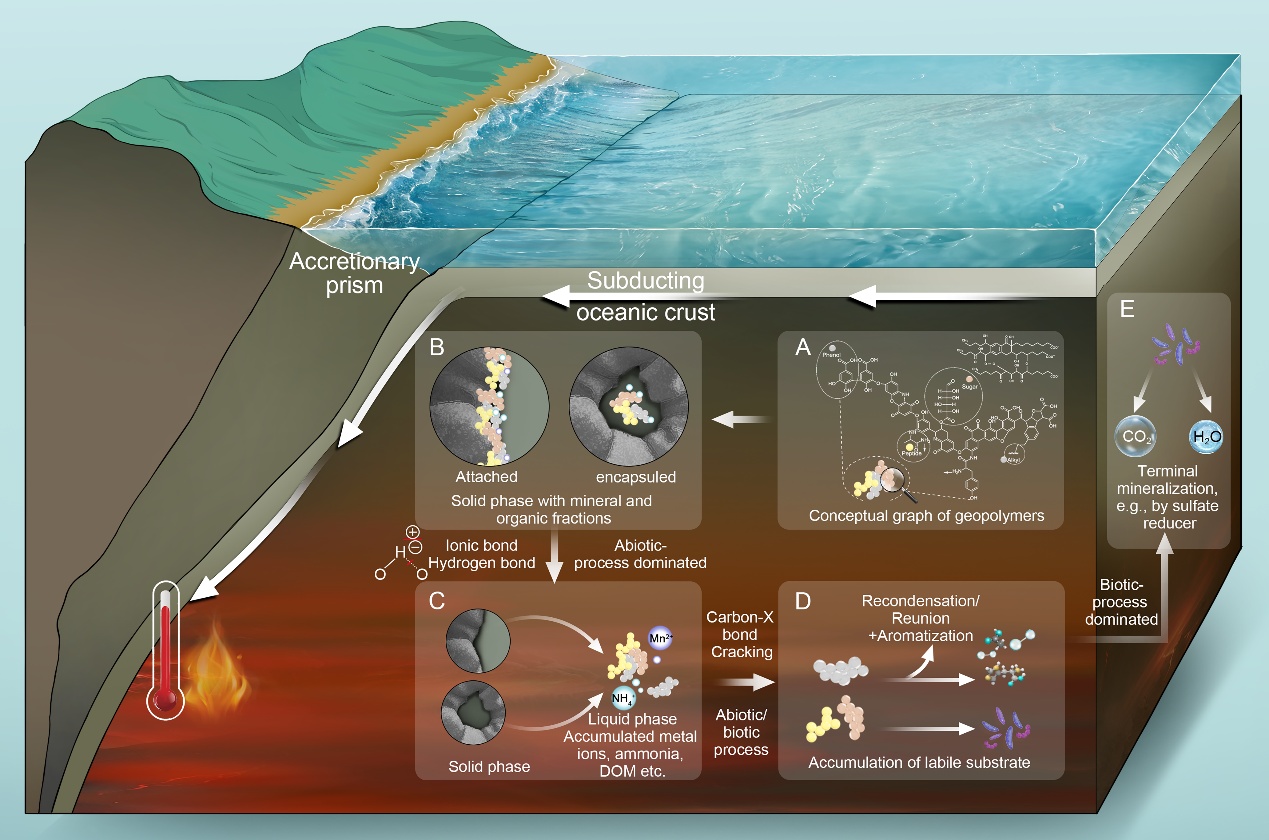 Coupling of abiotic and biotic processes in heated subseafloor. (Image by WANG et al)
<関連情報>
- https://english.cas.cn/newsroom/research_news/life/202508/t20250820_1051084.shtml
- https://www.science.org/doi/10.1126/sciadv.adw8638
適度な加熱により、780万年前の堆積物中の有機物が生物利用可能となる Moderate heating renders 7.8-million-year-old sedimentary organic matter bioavailable
Shuchai Gan, Verena B. Heuer, Frauke Schmidt, Lars Wörmer, […] , and Kai-Uwe Hinrichs
Science Advances Published:20 Aug 2025
DOI:https://doi.org/10.1126/sciadv.adw8638
Abstract
Marine sediments are a large reservoir of recalcitrant organic matter and host microbes at subsurface depths exceeding 2.4 kilometers and temperatures up to 120°C, yet the mechanisms supplying bioavailable substrates remain unclear. Here, we investigated 7.8-million-year-old sediment from IODP Site C0012 off the Nankai Trough, Japan, through incubations at 20°, 35°, 55°, and 85°C to simulate burial temperatures. Using 3D fluorescence spectroscopy and ultrahigh-resolution mass spectrometry, we tracked changes in dissolved organic matter (DOM). At 35°C, humic-like DOM was released alongside metal ions, exhibiting low bioavailability. At 55°C, abiotic decomposition of humic compounds generated smaller, more bioavailable DOM, promoting fermentation. At 85°C, large nitrogen-containing humic compounds decomposed, producing labile H2 and acetate mainly through abiotic processes, bypassing fermentation. Our findings show how abiotic thermal processes activate the refractory organic matter pool, advancing our understanding of long-term carbon sequestration in marine sediments and its implications for global carbon cycling.