2025-08-21 北海道大学
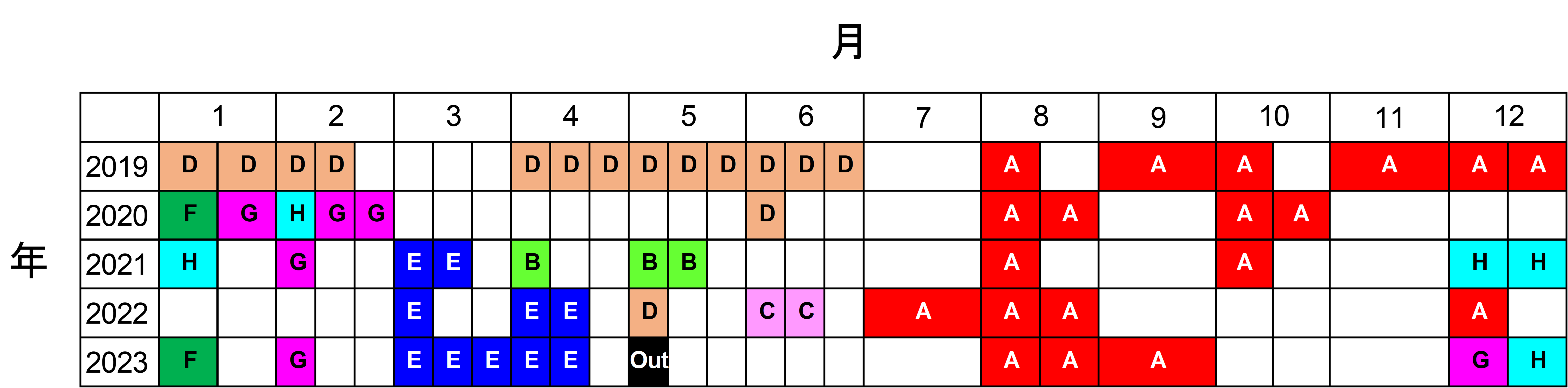
噴火湾における2019年-2023年の5年間にわたり出現した動物プランクトン群集の季節(横軸)及び経年(縦軸)変化。
クラスター解析により、動物プランクトン群集は群集A-Hの8群集に分けられた。夏-秋季には5年間を通して群集Aが出現し、経年変化は見られなかった。一方、冬-春季の群集は、2019年(群集D)とそれ以降で大きく異なった。2021年-2023年の3月-4月にまとまって観察された群集Eは尾虫類が多い事により特徴づけられており、それらを摂餌するカレイ類の仔魚にとって良い餌環境であったことが推測された。
<関連情報>
- https://www.hokudai.ac.jp/news/2025/08/post-2023.html
- https://www.hokudai.ac.jp/news/pdf/250821_pr3.pdf
- https://www.mdpi.com/2673-1924/6/3/49
2019-2023年の北海道南西部の噴火湾における動物プランクトン群集とサイズ組成の季節及び経年変化 Seasonal and Interannual Variations (2019–2023) in the Zooplankton Community and Its Size Composition in Funka Bay, Southwestern Hokkaido
Haochen Zhang,Atsushi Ooki,Tetsuya Takatsu and Atsushi Yamaguchi
Oceans Published: 4 August 2025
DOI:https://doi.org/10.3390/oceans6030049
Abstract
Funka Bay, located in southwest Hokkaido, is a vital fishing area with a shallow depth of less than 100 m. Seasonal flows of the Oyashio and Tsugaru Warm Current affect the marine environment, leading to significant changes in zooplankton communities, yet limited information is available on these variations. This study used ZooScan imaging to analyze seasonal and interannual changes in zooplankton abundance, biovolume, community structure, and size composition from 2019 to 2023. Water temperature was low in March–April and high in September–November, with chlorophyll a peaks occurring from February to April. Notable taxa such as Thaliacea, Noctiluca, and cladocerans were more common in the latter half of the year. Interannual variations included a decline in large cold-water copepods, Eucalanus bungii and Neocalanus spp., which were abundant in 2019 but decreased by 2023. Zooplankton abundance and biovolume showed synchronized seasonal changes, correlating with shifts in the Normalized Biovolume Size Spectra (NBSS) index, which measures size composition. Cluster analysis identified eight zooplankton communities, with Community A dominant from July to December across all years, while Community D was prevalent in early 2019 but was replaced in subsequent years. Community E emerged from March to April in 2021–2023. In 2019, large cold-water copepods were dominant, but from 2020 to 2023, appendicularians became the dominant group during the March–April period. The decline in large copepods is likely linked to marine heat waves, influencing yearly zooplankton community changes.