2025-08-15 イリノイ大学アーバナ・シャンペーン校
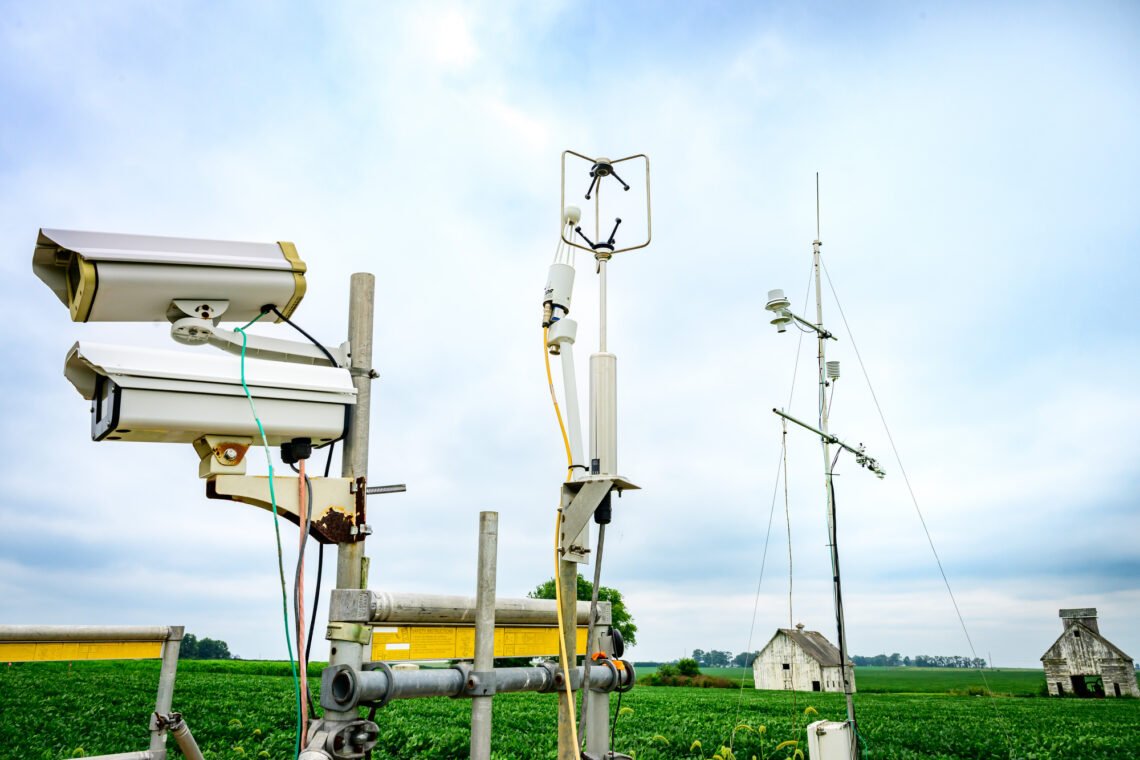 Researchers have installed a device to measure how different farming practices affect carbon flux on the farm. Photo by Fred Zwicky
<関連情報>
- https://aces.illinois.edu/news/paper-decarbonize-agriculture-expanding-policies-aimed-low-carbon-biofuels
- https://news.illinois.edu/paper-decarbonize-agriculture-by-expanding-policies-aimed-at-low-carbon-biofuels/
- https://www.science.org/doi/10.1126/science.adw6739
農業の脱炭素化への道筋として気候適応型バイオ燃料政策 農場ごとの炭素強度スコアに依存する政策は、気候変動対応型農業実践を促進する可能性があります。 Climate-smart biofuel policy as a pathway to decarbonize agriculture A policy that relies on farm-specific carbon-intensity scores can promote climate-smart agricultural practices.
Madhu Khanna, Bruno Basso, Jeff O’Hara, David Zilberman, and Gal Hochman
Science Published:14 Aug 2025
DOI:https://doi.org/10.1126/science.adw6739
Abstract
Strategies for achieving net-zero emissions climate goals have emphasized an important role for bioenergy to displace fossil fuels and for carbon-dioxide (CO2) removal from the atmosphere. Soil carbon sequestration is one of the key approaches for using the vast potential of land as a sink for atmospheric carbon. Carbon mitigation could be as high as 4 billion to 8 billion tonnes of CO2 per year with near complete deployment globally of practices that enhance soil carbon sequestration with crop production (1). However, there is a disconnect between renewable energy policies to promote the production of low-carbon biofuels and conservation policies that promote soil carbon sequestration practices. We propose that any “climate-smart” biofuel policy should consider farm-specific values of emissions from biofuel feedstock production and soil carbon sequestration and incentivize the adoption of climate-smart practices. This could provide lessons and develop capacity that may help expand policies and practices to agriculture more broadly.