2025-07-30 中国科学院(CAS)
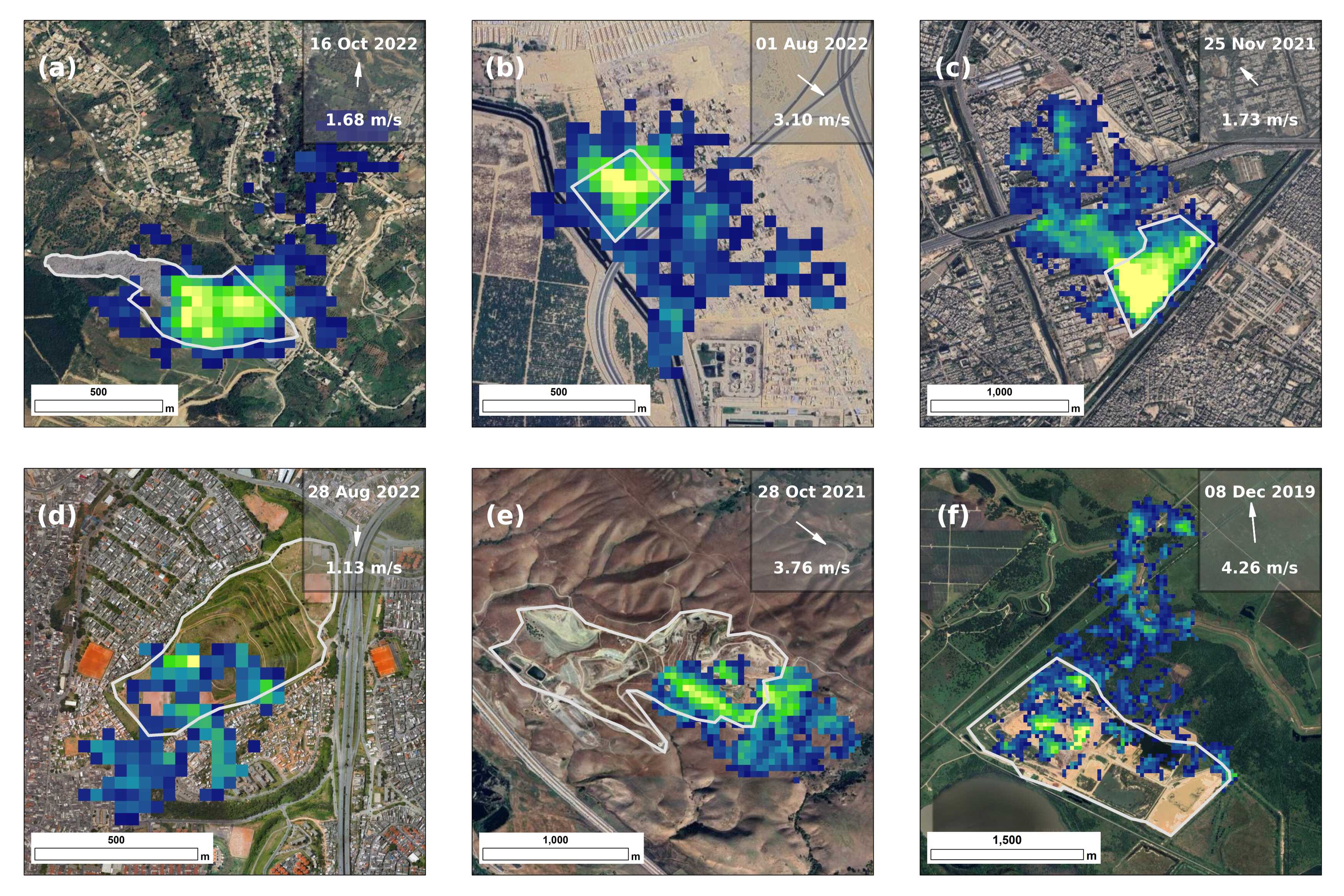 Satellite-based remote sensing detection of methane distribution at landfill sites. Panels a-c depict open dumpsites, while panels d-f show engineered sanitary landfills. (Image by AIR)
<関連情報>
- https://english.cas.cn/newsroom/research_news/infotech/202507/t20250729_1048616.shtml
- https://www.nature.com/articles/s41558-025-02391-1
埋立地管理の改善によるメタン排出の削減 Reduction of methane emissions through improved landfill management
Haoran Tong,Tianhai Cheng,Xingyu Li,Hao Zhu,Xiaotong Ye,Donghao Fan & Tao Tang
Nature Climate Change Published:28 July 2025
DOI:https://doi.org/10.1038/s41558-025-02391-1
Abstract
Solid waste in landfills continuously emits methane, which has become the third-largest anthropogenic source of methane emissions globally. The methane emissions from landfills exhibit substantial variability due to factors such as waste management practices and climatic conditions. Here we assessed methane emissions from 102 high-emitting landfills worldwide under different management strategies and climate conditions using 5 years of satellite observations. We find that, for these sites, total methane emissions from open dumps are underestimated by a factor of 5.3 ± 0.3 in the EDGAR v8.0 inventory. Transforming open dumpsites worldwide into sanitary landfills, while diverting organic waste to composters and biodigesters, can decrease methane emissions by 80% (60–89%), offering a mitigation potential of 760 (570–850) Mt CO2e annually. These results highlight that prioritizing improved waste management in developing countries, supported by economic and technological measures, represents one of the most effective strategies for mitigating methane emissions from the solid waste sector.