
2025-07-24 レンセラー工科大学(RPI)
<関連情報>
- https://news.rpi.edu/2025/07/24/rpi-mathematician-models-physics-undersea-waves-paving-way-more-accurate-climate
- https://www.nature.com/articles/s41467-024-51503-6
相互作用する内部波が、海洋内部の混合のグローバルパターンを説明 Interacting internal waves explain global patterns of interior ocean mixing
Giovanni Dematteis,Arnaud Le Boyer,Friederike Pollmann,Kurt L. Polzin,Matthew H. Alford,Caitlin B. Whalen & Yuri V. Lvov
Nature Communications Published:29 August 2024
DOI:https://doi.org/10.1038/s41467-024-51503-6
Abstract
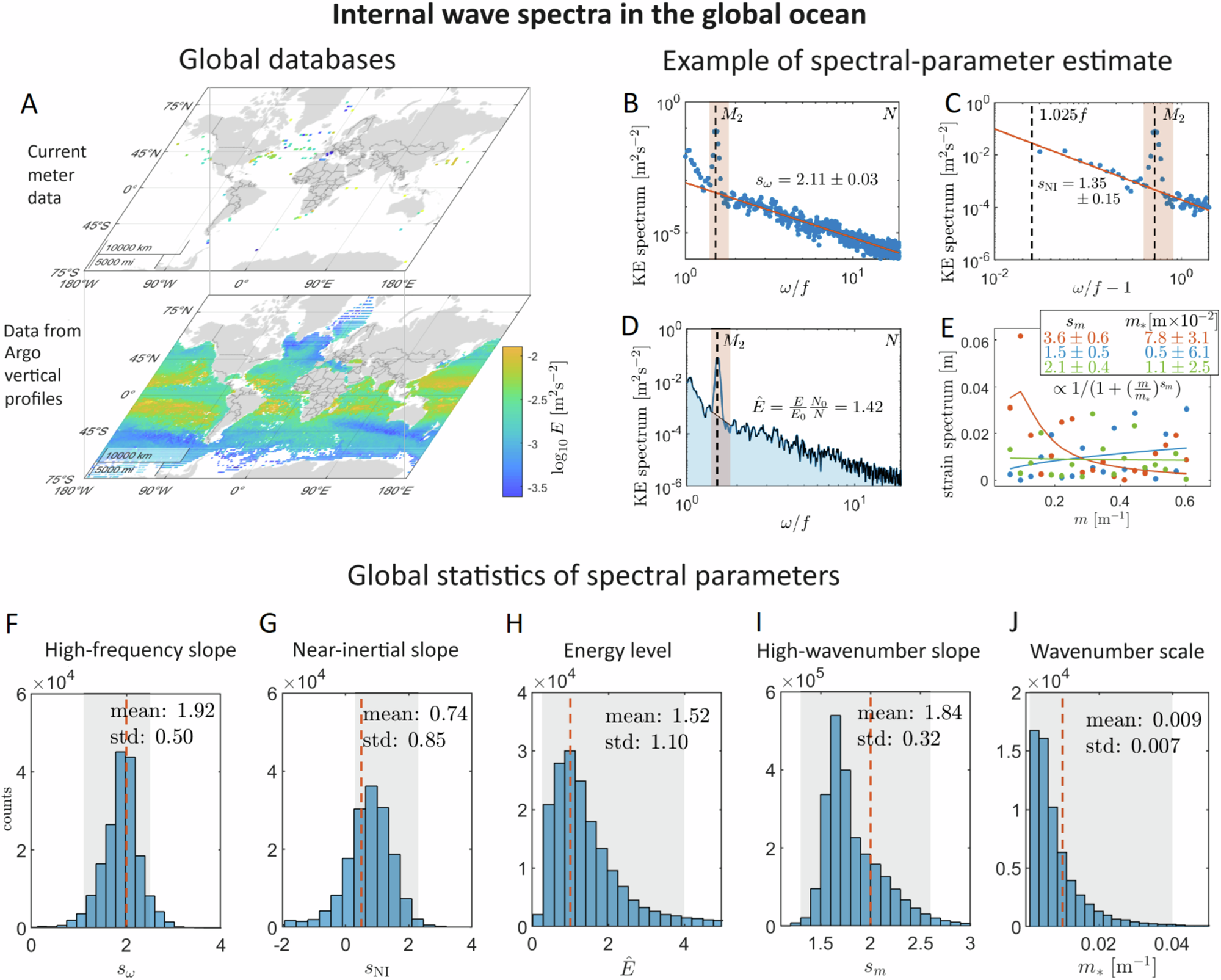
Across the stable density stratification of the abyssal ocean, deep dense water is slowly propelled upward by sustained, though irregular, turbulent mixing. The resulting mean upwelling determines large-scale oceanic circulation properties like heat and carbon transport. In the ocean interior, this turbulent mixing is caused mainly by breaking internal waves: generated predominantly by winds and tides, these waves interact nonlinearly, transferring energy downscale, and finally become unstable, break and mix the water column. This paradigm, long parameterized heuristically, still lacks full theoretical explanation. Here, we close this gap using wave-wave interaction theory with input from both localized and global observations. We find near-ubiquitous agreement between first-principle predictions and observed mixing patterns in the global ocean interior. Our findings lay the foundations for a wave-driven mixing parameterization for ocean general circulation models that is entirely physics-based, which is key to reliably represent future climate states that could differ substantially from today’s.


