2026-02-18 東京科学大学
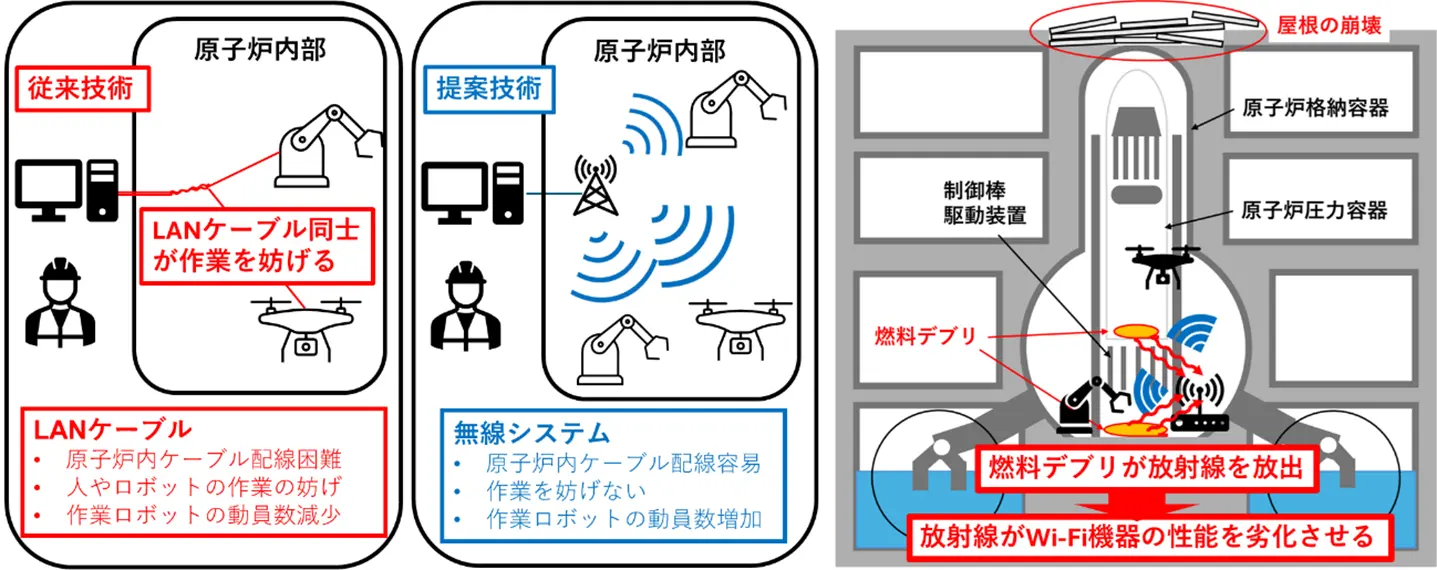
図1. 提案技術と福島原発における課題
<関連情報>
革新的原子力発電所廃止措置向け500kGy耐放射線性2.4GHz無線LAN受信機 A 500 kGy Radiation-Hardened 2.4 GHz Wi-Fi Receiver for Innovative Nuclear Power Plant Decommissioning
Yasuto Narukiyo, Sena Kato, Kotaro Yanaka, Yuya Takahashi, Masaya Miyahara, Jill Mayeda, Atsushi Shirane
2026 IEEE International Solid-State Circuits Conference Date Added to IEEE Xplore: 03 March 2026
DOI:https://doi.org/10.1109/ISSCC49663.2026.11408968
Abstract
This work presents a 2.4 GHz Wi-Fi receiver in 65 nm CMOS, designed with radiationhardened techniques to sustain operation under total ionizing dose to 500 kGy. Such tolerance addresses the requirements of nuclear power plant decommissioning, where conventional studies have considered doses of only several Gy. Measurement results confirm that even at 500 kGy, the proposed receiver maintains acceptable performance showing the feasibility of wireless systems in extreme radiation environments.