2026-02-17 コペンハーゲン大学(UCPH)
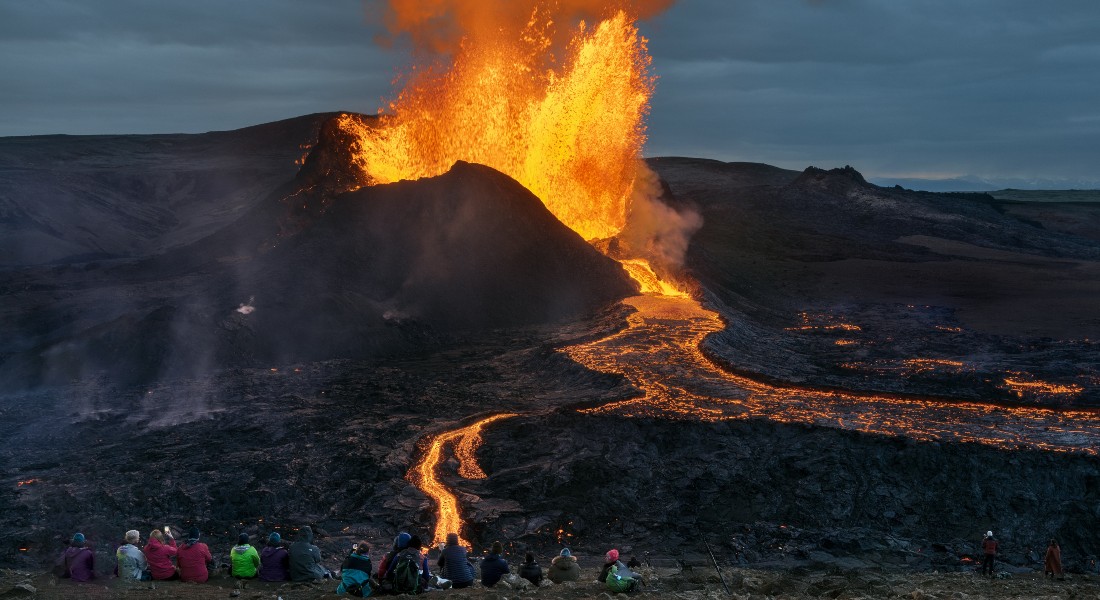
The new study points to volcanic eruptions as a cause for pushing the AMOC ocean current into a weakened or completely collapsed state. Photo: Getty
<関連情報>
- https://news.ku.dk/all_news/2026/02/new-knowledge-about-northern-europes-radiator-volcanic-eruptions-in-the-past-may-have-pushed-ocean-currents-towards-collapse/
- https://www.science.org/doi/10.1126/sciadv.adx2124
氷河条件下での火山活動による大西洋南北循環の崩壊と回復 Volcanism-induced collapse and recovery of the Atlantic meridional overturning circulation under glacial conditions
Guido Vettoretti, Ruei-Jia Hu, Ingo Bethke, Kirstin Krüger, […] , and Markus Jochum
Science Advances Published:4 Feb 2026
DOI:https://doi.org/10.1126/sciadv.adx2124
Abstract
Volcanic eruptions have considerable impacts on climate across various timescales; however, it remains uncertain if, and how, volcanic activity could drive climate change over multiple millennia. Here we incorporate realistic volcanic forcing into a large ensemble of glacial era–coupled atmosphere-ocean model simulations. These simulations are constrained by sulfate records from ice cores, which help estimate the timing of past major eruptions. We investigate how volcanic eruptions may have occasionally triggered abrupt climate change during the last glacial period. Our results show that very large equatorial eruptions can induce large changes in the Atlantic Meridional Overturning Circulation via atmospheric and ocean circulation changes and air-sea buoyancy fluxes, potentially pushing the climate system between persistent warm and cold states lasting millennia. A simplified perspective of the dynamics shows how unforced natural climate variability may exert a stabilizing influence decades after an eruption, especially as the system nears a tipping point.