
2026-03-23 スウォンジー大学
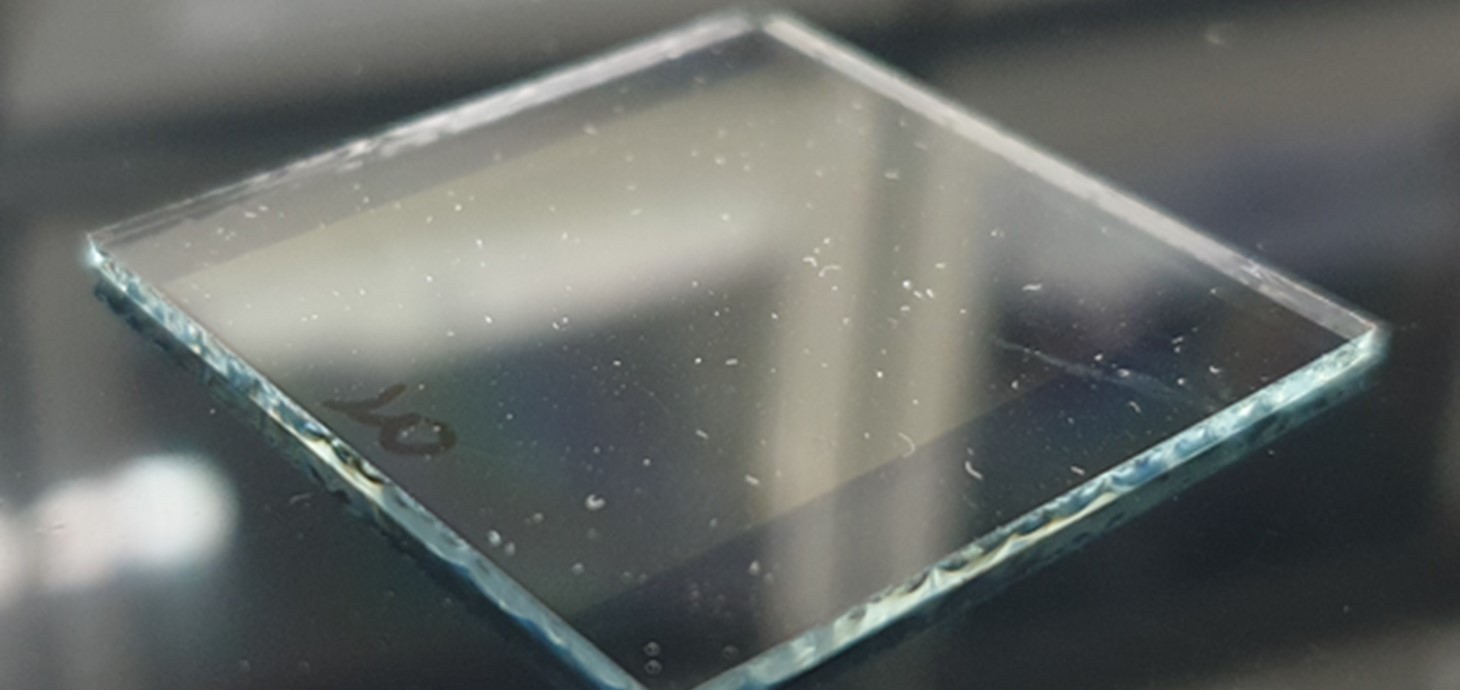
A partially made planar perovskite solar cell with dust deposited.
<関連情報>
- https://www.swansea.ac.uk/press-office/news-events/news/2026/03/study-finds-dust-resilient-perovskite-solar-cells-could-cut-manufacturing-costs-and-expand-green-energy-worldwide.php
- https://www.nature.com/articles/s43246-025-00993-y
粉塵の多い環境下で平面型ペロブスカイト太陽電池を製造する Manufacturing planar perovskite solar cells in dusty environments
Kathryn Lacey,Ershad Parvazian,Sarah-Jane Potts,Tom Dunlop,James McGettrick,Krishna Seunarine,Eifion Jewell,Matthew Davies,Matt Carnie & Trystan Watson
Communications Materials Published:24 November 2025
DOI:https://doi.org/10.1038/s43246-025-00993-y
Abstract
Production of silicon solar cells necessitates cleanrooms to prevent dust contamination, which can lead to defects and reduced performance. This poses challenges for scaling up manufacturing and improving accessibility for device manufacture in less developed economies as cleanrooms represent an expensive and energy intensive investment, and so it is key that the next generation of solar technology differentiates from this. Perovskite has the potential to be far more robust and resilient to defects caused by dust particles, which then impacts on the capital cost of the equipment required for manufacture. This study evaluates the effects of non-conductive dust on planar perovskite devices, testing two different device structures with efficiencies exceeding 16%, testing an active area of 0.09 cm2. The setup simulated dust settling during the manufacturing process, expecting compromised performance in contaminated devices. Results revealed that devices with dust performed similarly to clean ones, with only limited losses in some performance metrics. High tolerance to contamination suggests that perovskite technology may remain operational under less controlled environments. These findings point toward a more accessible fabrication route reducing dependence on expensive cleanroom conditions typically required for silicon-based technologies.


