2026-03-17 ワシントン州立大学(WSU)
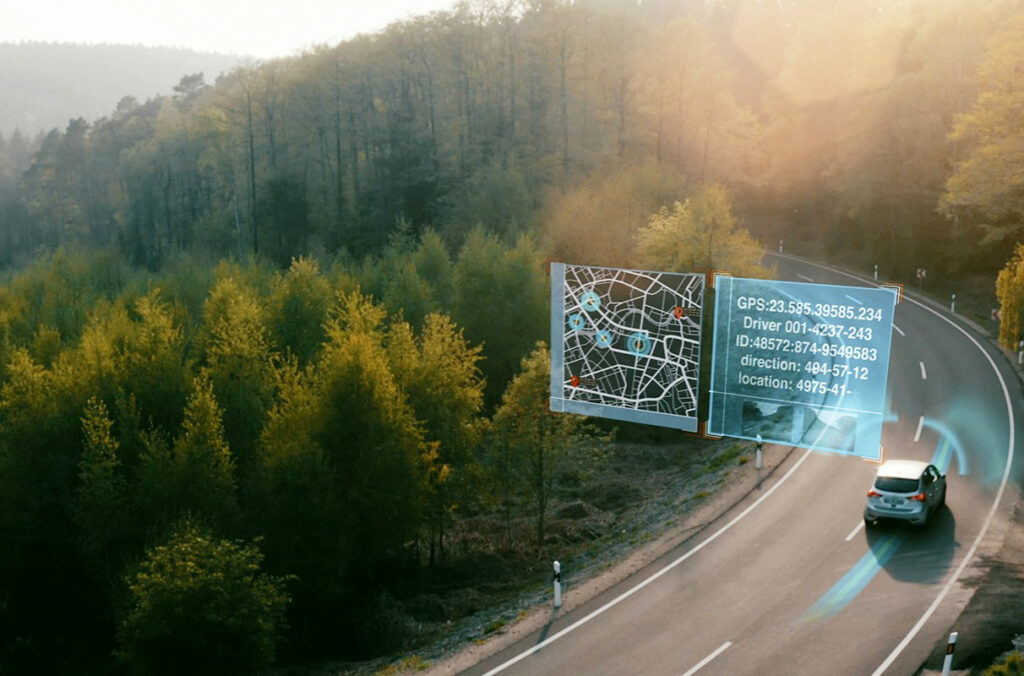
Photo by audioundwerbung on iStock
<関連情報>
- https://news.wsu.edu/press-release/2026/03/17/study-small-edge-computer-could-help-self-driving-cars-operate-in-rural-areas/
- https://dl.acm.org/doi/10.1145/3769102.3774639
自律走行車インテリジェンス向けエッジ展開型LLM Edge-Deployable LLMs for Autonomous Vehicle Intelligence
Ishparsh Uprety, Xinghui Zhao
SEC ’25: Proceedings of the Tenth ACM/IEEE Symposium on Edge Computing Published: 03 December 2025
DOI:https://doi.org/10.1145/3769102.3774639
Abstract
Autonomous driving (AD) has advanced significantly in perception through computer vision models, yet its reasoning layer remains limited. Current systems rely heavily on deep reinforcement learning (DRL), which requires extensive scenario-specific training data, high computational cost, and still struggles with unseen or rare situations. In this work, we explore replacing DRL-based reasoning with Large Language Models (LLMs), leveraging their contextual understanding and zero-shot adaptability to handle novel driving scenarios. Using structured simulation data from Highway-env, we demonstrate that LLMs can reason over dynamic traffic states and generate human-like driving decisions. To address the computational challenges of deploying LLMs in real-time on autonomous vehicles, we apply quantization techniques (AWQ, Q4_0) to the Mistral-7B model, reducing memory footprint and enabling inference on resource-constrained devices such as the Jetson Orin Nano. Our findings show that quantized LLMs not only preserve reasoning ability but also make edge deployment feasible, paving the way toward scalable, efficient, and safe autonomous driving systems.