2026-02-03 中国科学院(CAS)
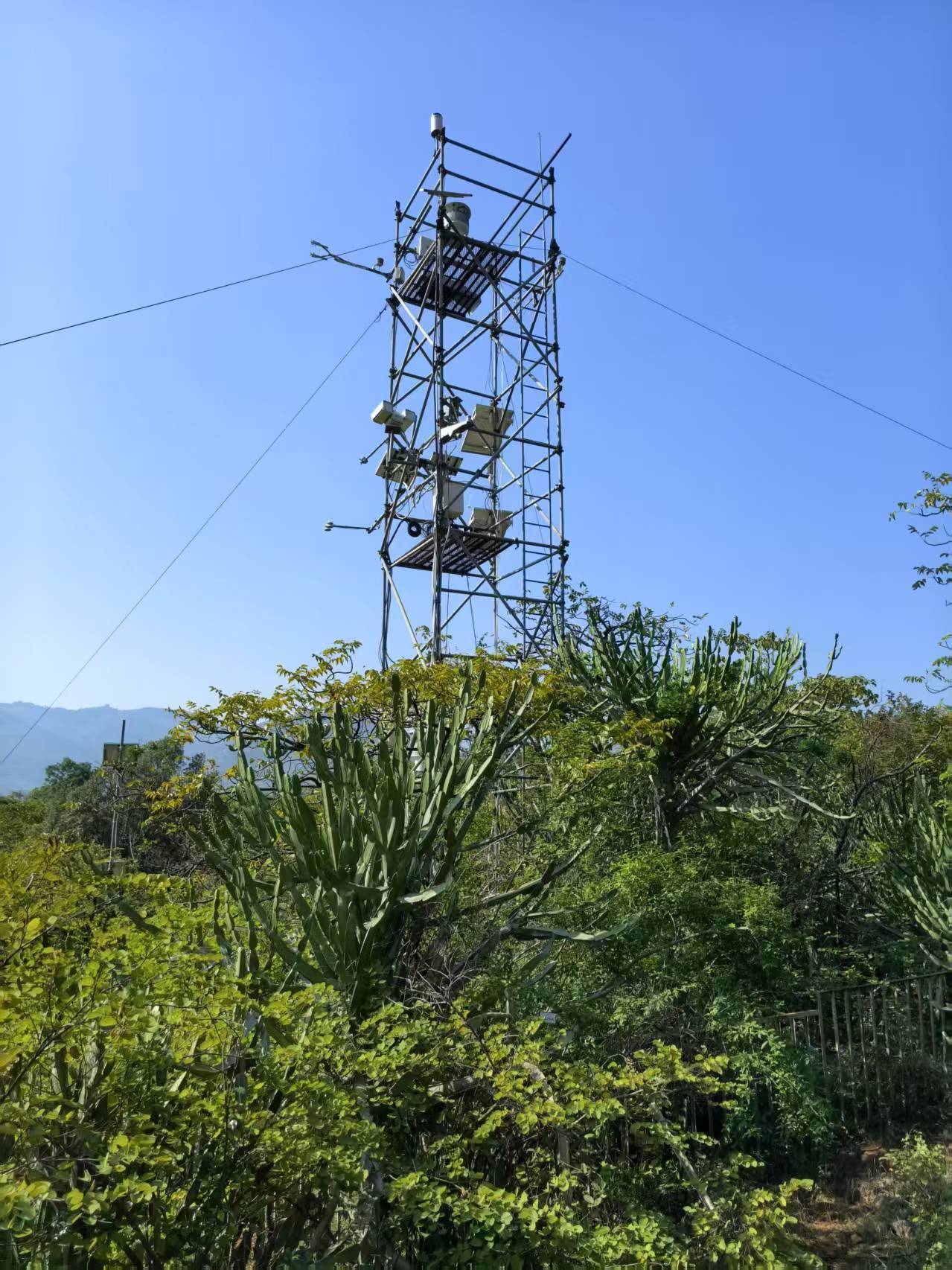
An eddy covariance flux tower site in the hot-dry valley savannas of Yunnan. (Image by SONG Qinghai)
<関連情報>
- https://english.cas.cn/newsroom/research-news/202602/W020260210538752097417.jpg
- https://onlinelibrary.wiley.com/doi/10.1111/ele.70321
干ばつ後の植生変化は、中国南西部のサバンナ生態系における炭素、水、エネルギーの反応の相違につながる Post-Drought Vegetation Shifts Lead to Divergent Carbon, Water and Energy Responses in a Savanna Ecosystem of Southwest China
Palingamoorthy Gnanamoorthy, Junbin Zhao, Yajun Chen, Linjie Jiao, Boonsiri Sawasdchai, Zhang Jing, Abhishek Chakraborty, Pramit Kumar Deb Burman, Sung-Ching Lee, …
Ecology Letters Published: 26 January 2026
DOI:https://doi.org/10.1111/ele.70321
ABSTRACT
Increasing drought frequency and intensity affect biophysical functions of natural ecosystems. In tropical semi-arid savannas, while immediate drought effects are well-studied, the drought legacy effects on vegetation composition and associated ecosystem functions remain unclear. We used data of vegetation composition, net ecosystem CO2 exchange, surface albedo and evapotranspiration (ET) in 2017–2022 from a savanna ecosystem, Southwest China, to investigate the legacy effect of an extreme drought event that occurred in 2019. Vegetation declined continuously for 3 post-drought years. While tree numbers declined by 12%, shrub numbers dropped by 50% compared with pre-drought levels, shifting vegetation dominance toward trees. This structural change caused sustained reductions in albedo and ET, which remained below pre-drought levels, despite gross primary production recovering in the years immediately post-drought. Vegetation shifts disproportionately impact ecosystem functions, with energy and water fluxes exhibiting greater vulnerability and potentially enhancing regional warming as droughts increase in Asian savannas.