2025-12-10 中国科学院(CAS)

<関連情報>
- https://english.cas.cn/newsroom/cas_media/202512/t20251215_1137078.shtml
- https://www.nature.com/articles/s40494-025-02172-1
酸素同位体年輪年代学を用いた紫禁城の歴史的木材の年代測定と起源の追跡 Dating and provenance tracing of historical timbers in the Forbidden City using oxygen isotope dendrochronology
Qingyu Zhao,Chenxi Xu,Qiong Zhang,Wei Wu,Peng Zhao & Zhengtang Guo
npj Heritage Science Published:24 November 2025
DOI:https://doi.org/10.1038/s40494-025-02172-1
Abstract
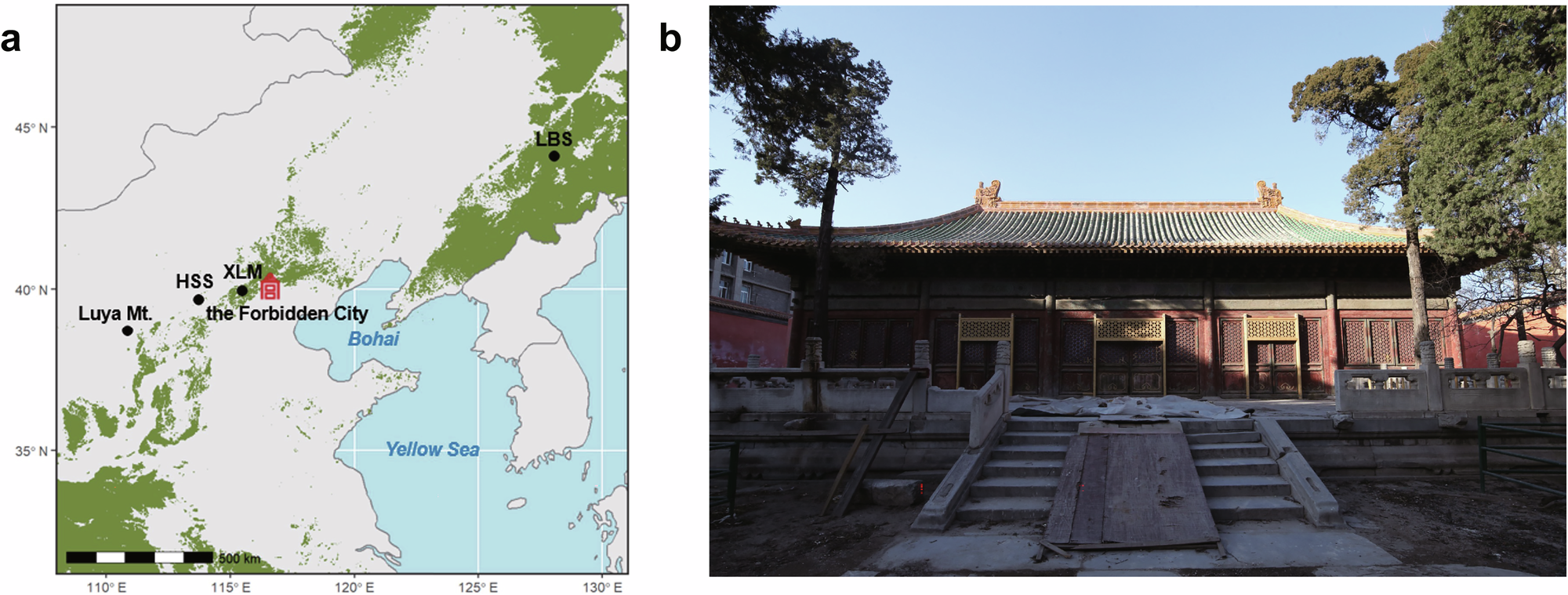
The Forbidden City is one of the largest and best-preserved ancient wooden architectural complexes in the world. Yet we lack scientific and precise methodologies to determine the construction and renovation history of this complex. We conducted cross-dating based on tree-ring oxygen isotope of roof timbers from the Dagaoxuan Hall complex, part of the Forbidden City complex. Successful matching with an isotopic chronology from northeast China gave an age range from 1749 to 1892, which corresponds precisely with renovation records from documentary. It also confirmed these timbers likely originated from northeast China. Combined with historical documentary evidence, we confirm a change in the timber use and provenance of the Forbidden City from the Ming to the Qing dynasties. This is the first reported application of oxygen isotope dendrochronology to the provenance tracing of historical timbers, and confirms the significant potential of this method for tracing the origin of archeological woods.