2025-12-15 中国科学院(CAS)
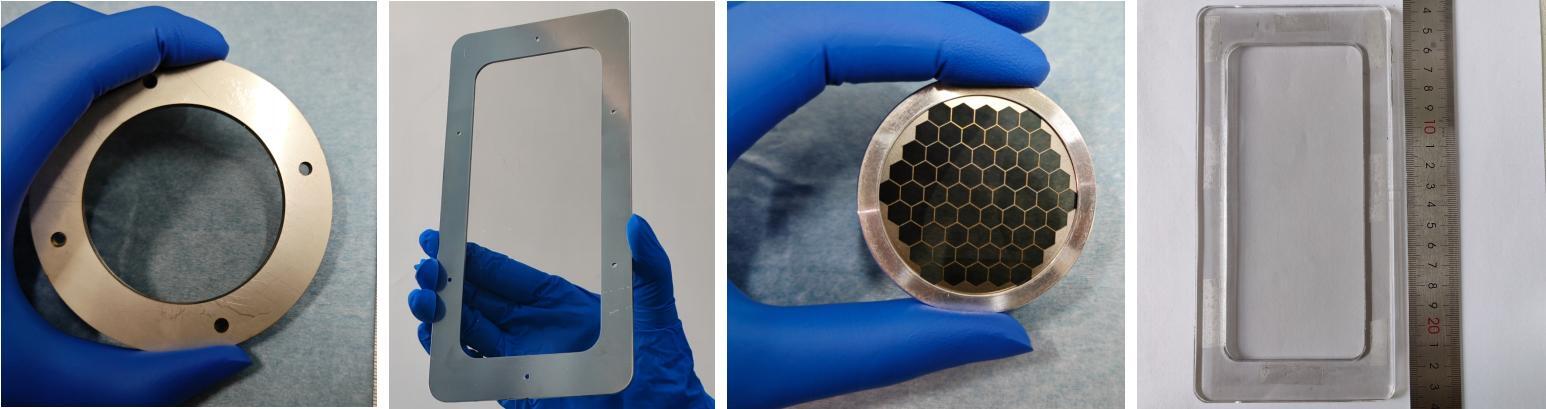
SWCNT films suspended on different substrates (Image by IMR)
<関連情報>
- https://english.cas.cn/newsroom/research_news/tech/202512/t20251212_1136066.shtml
- https://www.cell.com/joule/abstract/S2542-4351(25)00406-4
SWCNTを統合して、拡張可能で製造可能なフレキシブルペロブスカイト太陽電池モジュールの安定性の格差を埋める Integrating SWCNT to bridge the stability divide in scalable and manufacturable flexible perovskite solar modules
Jing Zhang ∙ Yu Meng ∙ An-Ping Wu ∙ … ∙ Hui-Ming Cheng ∙ S. Ravi P. Silva ∙ Wei Zhang
Joule Published:December 9, 2025
DOI:https://doi.org/10.1016/j.joule.2025.102225
Context & scale
Flexible perovskite devices hold promise as next-generation power supplies. They feature lightweight, low-cost, and adaptable traits, which enable bending, folding, and cheap built-in integration. In addition, no heavy or cumbersome frames are needed for diverse uses. Yet, these devices face the key challenge of short lifespans, mainly arising from high water vapor transmission in flexible plastic substrates and the associated perovskite degradation. Herein, we propose single-walled carbon nanotubes (SWCNTs) as window electrodes, which show excellent hydrophobicity and curb moisture ingress. This approach effectively mitigates the moisture-induced degradation and thus boosts device stability. Moreover, SWCNT-based solar modules keep mechanical flexibility and affordability for varied applications. These advances open paths to sustainable, cost-effective energy systems for self-powered buildings and infrastructure toward a net-zero carbon future.
Highlights
- SWCNT window electrodes enable a PCE over 20% in flexible perovskite solar modules
- Superior stability over ITO under bending, heat, and light stress
- Low-cost, scalable ITO-free route for commercial flexible PV
Summary
Flexible perovskite solar modules (f-PSMs) represent a pivotal innovation in current renewable energy technologies, offering a pathway toward sustainable and efficient energy solutions. However, achieving operational stability without compromising efficiency or escalating material costs remains a critical challenge. This study explores the application of single-walled carbon nanotubes (SWCNTs) as window electrodes in fabricating scalable f-PSMs, achieving a remarkable power conversion efficiency (PCE) surpassing 20%. The exceptional stability of SWCNT films enables the resultant f-PSMs to withstand various external stresses while maintaining high performance. Simulating real-world conditions, including day/night cycles, SWCNT-based f-PSMs exhibit superior stability compared with conventional counterparts employing indium tin oxide (ITO) electrodes. By replacing scarce and costly ITO with readily available alternatives, this work underscores the potential of SWCNTs to enhance both the sustainability and scalability of flexible solar technologies. These findings bridge the gap between laboratory research and practical manufacturable applications, advancing the commercialization of flexible photovoltaics.