
2025-12-04 ケンブリッジ大学
<関連情報>
- https://www.cam.ac.uk/stories/volcanoes-black-death
- https://www.nature.com/articles/s43247-025-02964-0
気候による地中海の穀物貿易の変化は飢饉を緩和したが、中世ヨーロッパに黒死病をもたらした Climate-driven changes in Mediterranean grain trade mitigated famine but introduced the Black Death to medieval Europe
Martin Bauch & Ulf Büntgen
Nature Earth Environment Published:04 December 2025
DOI:https://doi.org/10.1038/s43247-025-02964-0
Abstract
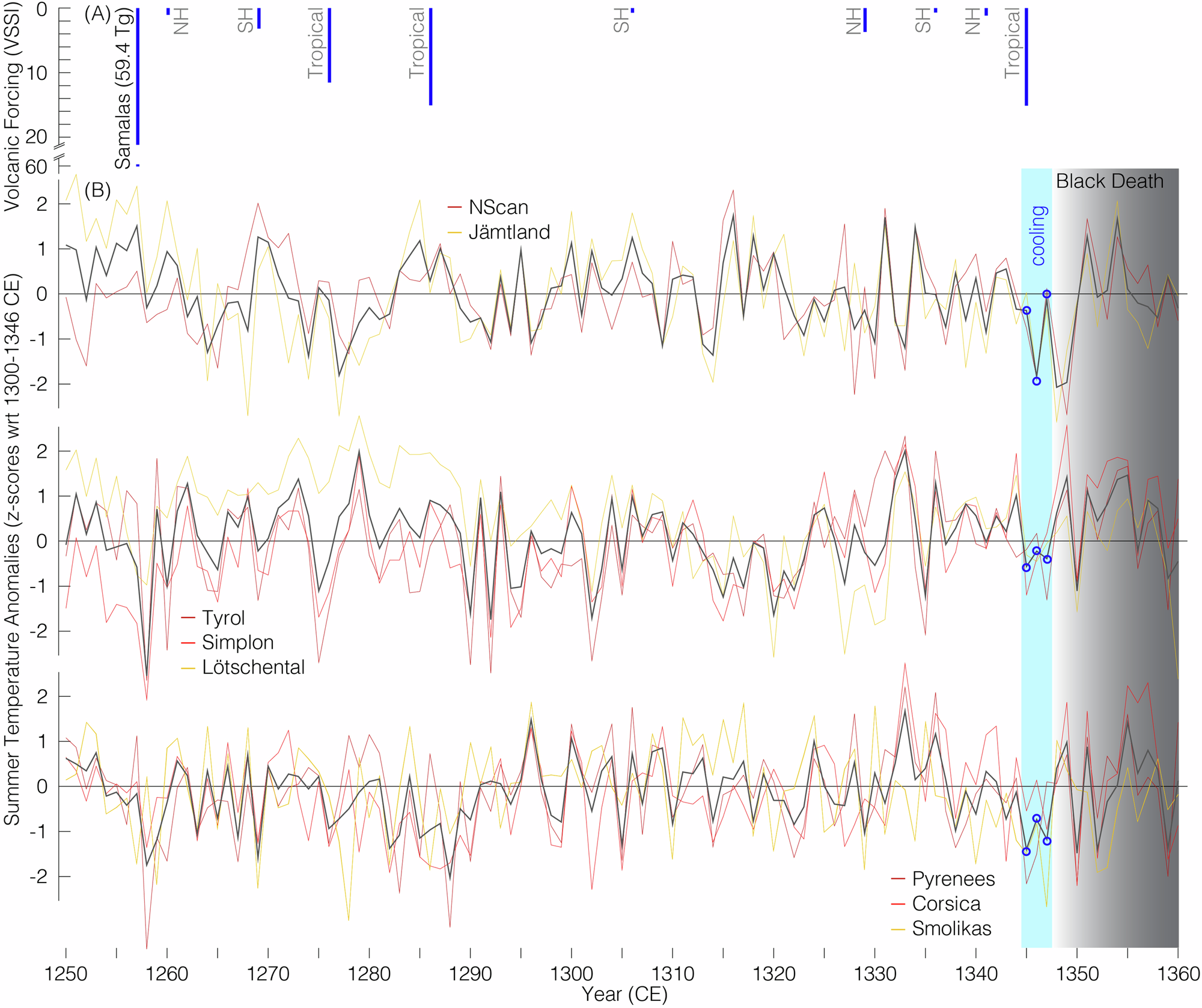
The first wave of the second plague pandemic, the Black Death, claimed much of Europe’s human population in just a few years after 1347 CE. While it is accepted that the causative bacterium Yersinia pestis originated from wildlife rodent populations in central Asia and reached Europe via the Black Sea region, reasons for the timing, spread and virulence of the onset of the Black Death are still debated. Here, we argue that a post-volcanic climate downturn and trans-Mediterranean famine from 1345–1347 CE forced the Italian maritime republics of Venice, Genoa and Pisa to activate their well-established supply network and import grain from the Mongols of the Golden Horde around the Sea of Azov in 1347 CE. This climate-driven change in long-distance grain trade not only prevented large parts of Italy from starvation but also introduced the plague bacterium to Mediterranean harbours and fueled its rapid dispersal across much of Europe.


