2025-12-01 スイス連邦工科大学ローザンヌ校(EPFL)
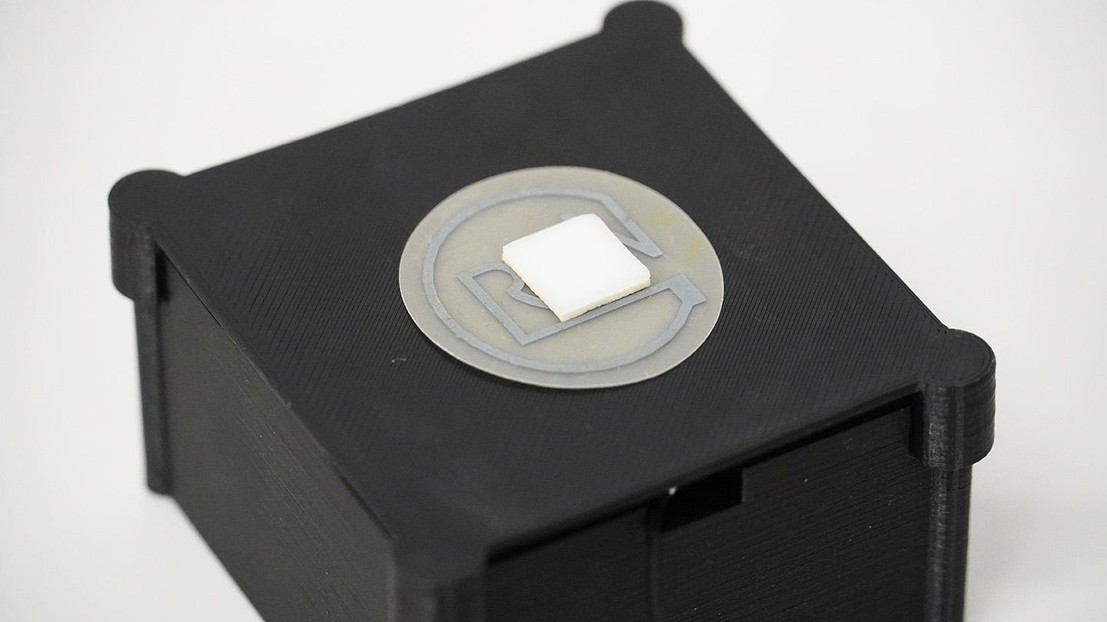
The smart sensor on the wireless tag reader. 22025 EPFL/LMTS CC-BY-SA 4.0
<関連情報>
- https://actu.epfl.ch/news/a-biodegradable-smart-sensor-to-monitor-sensitiv-2/
- https://www.nature.com/articles/s41467-025-65458-9
持続可能なIoTのための生分解性材料から作られた、エコ吸収性チップレス温度応答タグ Ecoresorbable chipless temperature-responsive tag made from biodegradable materials for sustainable IoT
James Bourely,Nicolas Fumeaux,Xavier Aeby,Jaemin Kim,Gilberto Siqueira,Christian Beyer,David Schmid,Oleksandr Vorobyov,Gustav Nyström & Danick Briand
Nature Communications Published:25 November 2025
DOI:https://doi.org/10.1038/s41467-025-65458-9
Abstract
Temperature monitoring within the cold chain, essential for safety of perishable products, typically employs devices such as battery-powered data loggers and radio-frequency identification tags. Such devices include non-eco-friendly components, posing challenges for their safe disposal and recycling. This study demonstrates the fabrication of a fully ecoresorbable, chipless, and wireless temperature-responsive tag, designed to irreversibly track temperature changes through a permanent shift in resonance frequency. The tag is printed on a customized moisture-resistant poly(β-hydroxybutyrate)-cellulose composite substrate. An RLC circuit made of printed zinc metallic traces, encapsulated with beeswax to prevent oxidation, enables seamless wireless operation. The tag utilizes bio-based phase-changing materials such as frozen olive, jojoba, and coconut oils to induce irreversible resonance frequency shifts of more than 30 MHz at respective melting points of 8 °C, 15 °C, and 25 °C. A cellulose capillary element efficiently absorbs the melted oil, enabling reliable operation at inclinations from 0° to 90°. At the end of its service life, the device can undergo disintegration in a compost environment within 9 weeks. This work demonstrates a sustainable chipless technology from material selection and manufacturing processes to end-of-life disposal as an advanced thermal indicator solution for cold chain temperature-excursion detection.