2025-10-27 ハーバード大学
Web要約 の発言:
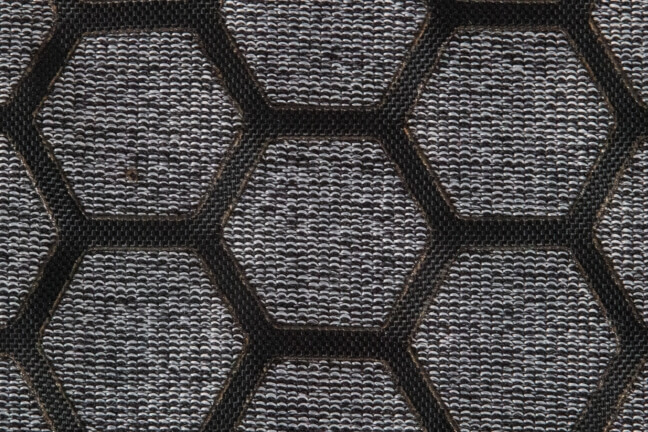
Dimpled metamaterial in honeycomb pattern.
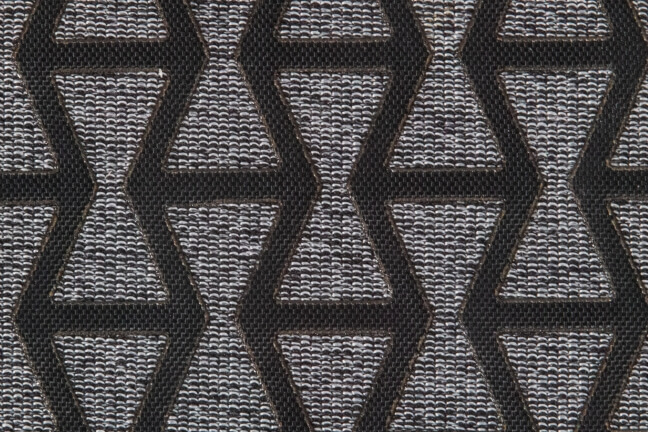
Dimpled metamaterial in hourglass pattern.
<関連情報>
- https://seas.harvard.edu/news/2025/10/need-speed
- https://advanced.onlinelibrary.wiley.com/doi/abs/10.1002/adma.202505817
空気力学制御のための繊維メタマテリアルのプログラム可能な表面ディンプル加工 Programmable Surface Dimpling of Textile Metamaterials for Aerodynamic Control
David T. Farrell, Connor M. McCann, Antonio Elia Forte, Conor J. Walsh, Katia Bertoldi
Advanced Materials Published: 01 July 2025
DOI:https://doi.org/10.1002/adma.202505817
Abstract
Static aerodynamic surfaces are inherently limited in their ability to adapt to dynamic velocity profiles or environmental changes, restricting their performance under variable operating conditions. This challenge is particularly pronounced in high-speed competitive sports, such as cycling and downhill skiing, where the properties of a static textile surface are mismatched with highly dynamic wind-speed profiles. Here, an textile metamaterial is introduced that is capable of variable aerodynamic profiles through a stretch-induced dimpling mechanism, even when tightly conformed to a body or object. Wind-tunnel experiments are used to characterize the variable aerodynamic performance of the dimpling mechanism, while Finite Element (FE) simulations efficiently characterize the design space to identify optimal textile metamaterial architectures. By controlling dimple size, the aerodynamic performance of the textile can be tailored for specific wind-speed ranges, resulting in an ability to modulate drag force at target wind-speeds by up to 20%. Furthermore, the potential for active control of a textiles’ aerodynamic properties is demonstrated, in which controlled stretching allows the textile to sustain optimal performance across a dynamic wind-speed profile. These findings establish a new approach to aerodynamic metamaterials, with surface dimpling and thus variable fluid-dynamic properties offering transformative applications for wearables, as well as broader opportunities for aerospace, maritime, and civil engineering systems.