2025-10-22 カリフォルニア大学サンディエゴ校(UCSD)
<関連情報>
- https://today.ucsd.edu/story/retreating-glaciers-may-send-fewer-nutrients-to-the-ocean
- https://www.nature.com/articles/s41467-025-64731-1
潮水循環がアルプスの氷河堆積物プルームの地球化学を駆動する Tidewater cycle drives alpine glacial sediment plume geochemistry
K. O. Forsch,A. Ruacho & S. M. Aarons
Nature Communications Published:22 October 2025
DOI:https://doi.org/10.1038/s41467-025-64731-1
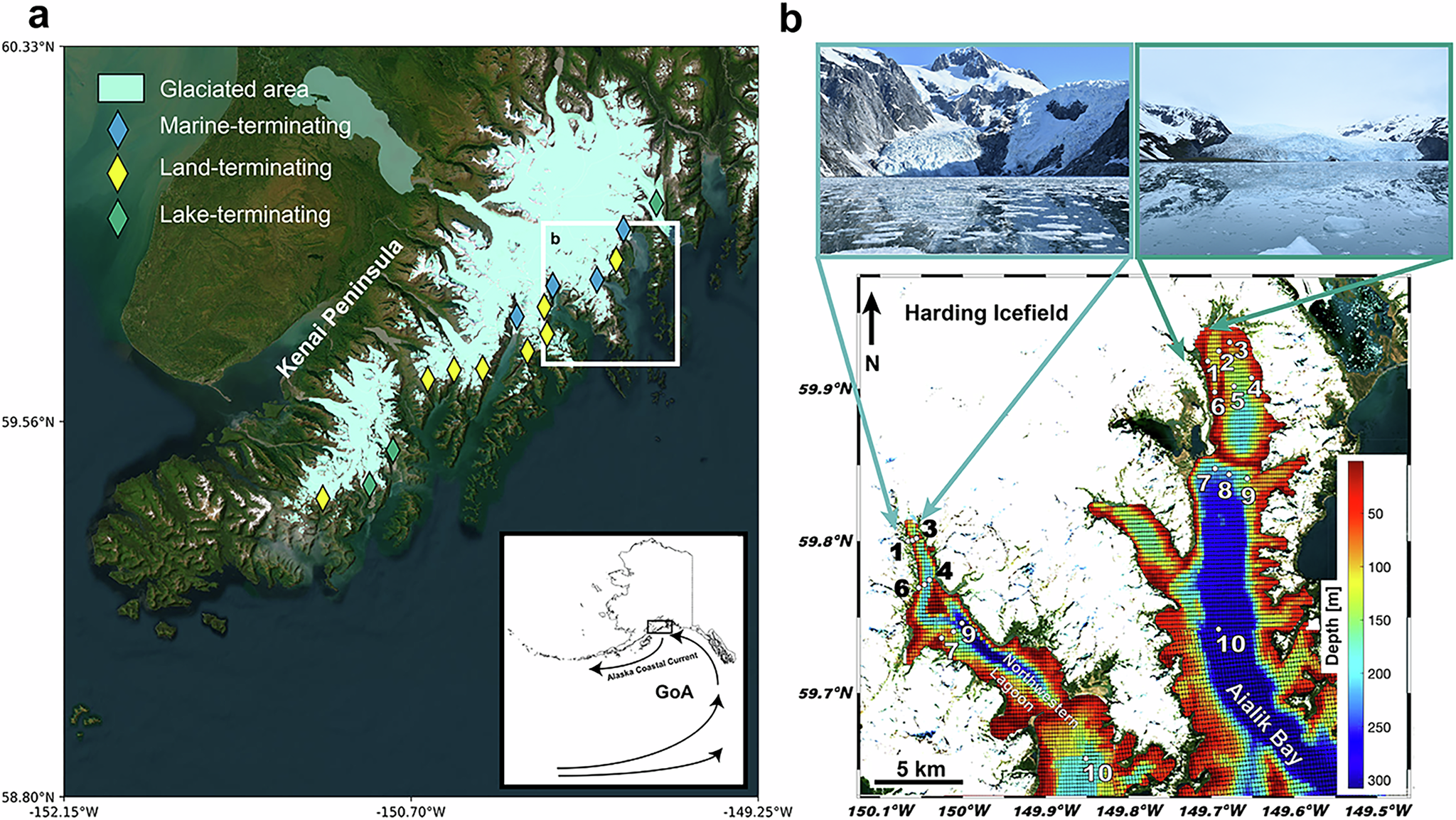
Abstract
Sediments transported by glacial meltwaters are important sources of trace-metal micronutrients for coastal microbial communities, linking cryospheric processes with ocean fertilization and biogeochemical cycles. Tidewater glacier advance-retreat cycles drive sediment fluxes and influence fjord geochemistry. Here, we used a chemical extraction method to determine the iron and manganese fertilization potential of suspended sediment-plume and iceberg-laden particulate matter from two adjacent, yet geomorphologically distinct, fjords in Southcentral Alaska. We found that the glacier retreat status underpinned the fraction of labile trace-metals within fjord surface plumes, with distinctly lower lability of metals associated with recent and rapid retreat coincident with enhanced erosion and chemical weathering. Particle size did not affect chemical lability, resulting in a well-mixed particle assemblage transported to the coastal ocean. With global tidewater glacier retreat, these results provide implications for future ecosystem fertilization via cryospheric processes and the interpretation of fjord sediment archives.