2025-08-18 レンセラー工科大学(RPI)
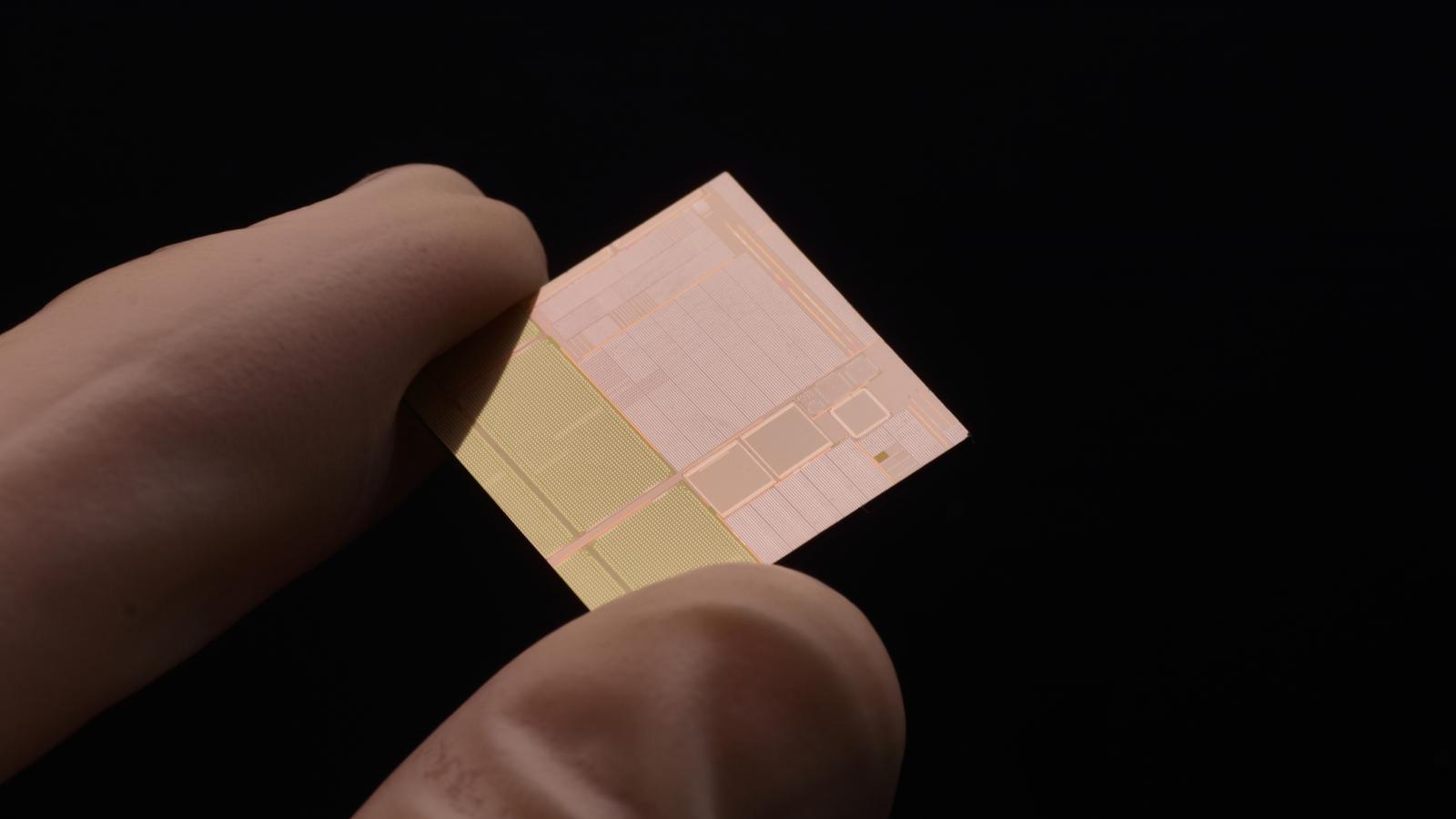
The new technique to manufacture ultra-thin semiconducting membranes could lead to a breakthrough in night vision technology (Getty Images)
<関連情報>
- https://news.rpi.edu/2025/08/18/nanomanufacturing-breakthrough-could-revolutionize-night-vision-technology-other-fields
- https://www.nature.com/articles/s41586-025-08874-7
冷却不要の赤外線検出のためのエピタキシャル膜の原子レベルでの剥離 Atomic lift-off of epitaxial membranes for cooling-free infrared detection
Xinyuan Zhang,Owen Ericksen,Sangho Lee,Marx Akl,Min-Kyu Song,Haihui Lan,Pratap Pal,Jun Min Suh,Shane Lindemann,Jung-El Ryu,Yanjie Shao,Xudong Zheng,Ne Myo Han,Bikram Bhatia,Hyunseok Kim,Hyun S. Kum,Celesta S. Chang,Yunfeng Shi,Chang-Beom Eom & Jeehwan Kim
Nature Published:23 April 2025
DOI:https://doi.org/10.1038/s41586-025-08874-7
Abstract
Recent breakthroughs in ultrathin, single-crystalline, freestanding complex oxide systems have sparked industry interest in their potential for next-generation commercial devices1,2. However, the mass production of these ultrathin complex oxide membranes has been hindered by the challenging requirement of inserting an artificial release layer between the epilayers and substrates3,4. Here we introduce a technique that achieves atomic precision lift-off of ultrathin membranes without artificial release layers to facilitate the high-throughput production of scalable, ultrathin, freestanding perovskite systems. Leveraging both theoretical insights and empirical evidence, we have identified the pivotal role of lead in weakening the interface. This insight has led to the creation of a universal exfoliation strategy that enables the production of diverse ultrathin perovskite membranes less than 10 nm. Our pyroelectric membranes demonstrate a record-high pyroelectric coefficient of 1.76 × 10⁻² C m−2 K−1, attributed to their exceptionally low thickness and freestanding nature. Moreover, this method offers an approach to manufacturing cooling-free detectors that can cover the full far-infrared spectrum, marking a notable advancement in detector technology5.