2025-07-16 イリノイ大学アーバナ・シャンペーン校
<関連情報>
- https://aces.illinois.edu/news/biologicals-vs-biostimulants-illinois-study-clarifies-crop-input-confusion
- https://acsess.onlinelibrary.wiley.com/doi/10.1002/ael2.70027
- https://www.mdpi.com/2073-4395/11/7/1297
生物刺激剤か生物学的か?微生物接種剤の定義、分類、規制の複雑さ Biostimulant or biological? The complexity of defining, categorizing, and regulating microbial inoculants
Connor N. Sible, Juliann R. Seebauer, Frederick E. Below
Agricultural & Environmental Letters Published: 09 July 2025
DOI:https://doi.org/10.1002/ael2.70027
Abstract
Agronomic use of specialty products known as biostimulants to improve crop productivity is growing. Traditionally, biostimulants are defined as any substance or microorganism applied to plants to enhance nutrient use efficiency, tolerance to abiotic stress, and crop yield and/or quality. However, grouping non-living products with living microbial inoculants poses regulatory guideline challenges. Moreover, peer-reviewed literature and regulatory legislation utilize “biostimulants” while industry and farmers have recently adopted the term “biologicals,” confusing discussions related to product regulation and policy. To better understand the challenges associated with this input sector, we have focused on four critical aspects: (1) the current regulatory status, (2) terminology disparity of biostimulants and biologicals, (3) key attributes that distinguish microorganisms from non-living biostimulants, and (4) mechanism of action differences between plant growth-promoting microorganisms and plant growth regulators. Therefore, we propose that living beneficial microorganisms and non-living biostimulants be separated with distinct regulatory requirements.
Plain Language Summary
A new class of crop inputs—biostimulants or biologicals—is emerging to help producers sustainably achieve high crop yields. Applied directly to the soil or crops, they enhance nutrient availability or help the plants manage stress, such as drought. Unlike fertilizers or pesticides, these products are not direct nutrient additions or control agents, they are a distinct category. However, as this field grows, the terms and definitions remain inconsistent among industry, academic, and government groups, with no current US approved regulation. Often described as “substances or microorganisms,” these products vary widely, with newer ones often being living bacteria or fungi inoculants. This commentary explores their current regulatory status, the differences in terminology used, and the traits distinguishing microbial products from substance-based ones. Our review suggests categorizing them into two groups: living microorganisms (biologicals) and non-living substances (biostimulants).
Core Ideas
- Biostimulants versus biologicals terminology differs between interest groups.
- Direct effect of microbial inputs on plant growth are often overlooked to prevent stricter plant growth regulator-level regulation.
- Living microbial inoculants and non-living inputs should not be jointly regulated.
- Regulation updates must validate current products while allowing feasibility for development of future solutions.
植物バイオスティミュラント: カテゴリー別レビュー、連作作物生産への影響、土壌健全性指標との関係 Plant Biostimulants: A Categorical Review, Their Implications for Row Crop Production, and Relation to Soil Health Indicators
Connor N. Sible,Juliann R. Seebauer and Frederick E. Below
Agronomy Published: 26 June 2021
DOI:https://doi.org/10.3390/agronomy11071297
Abstract
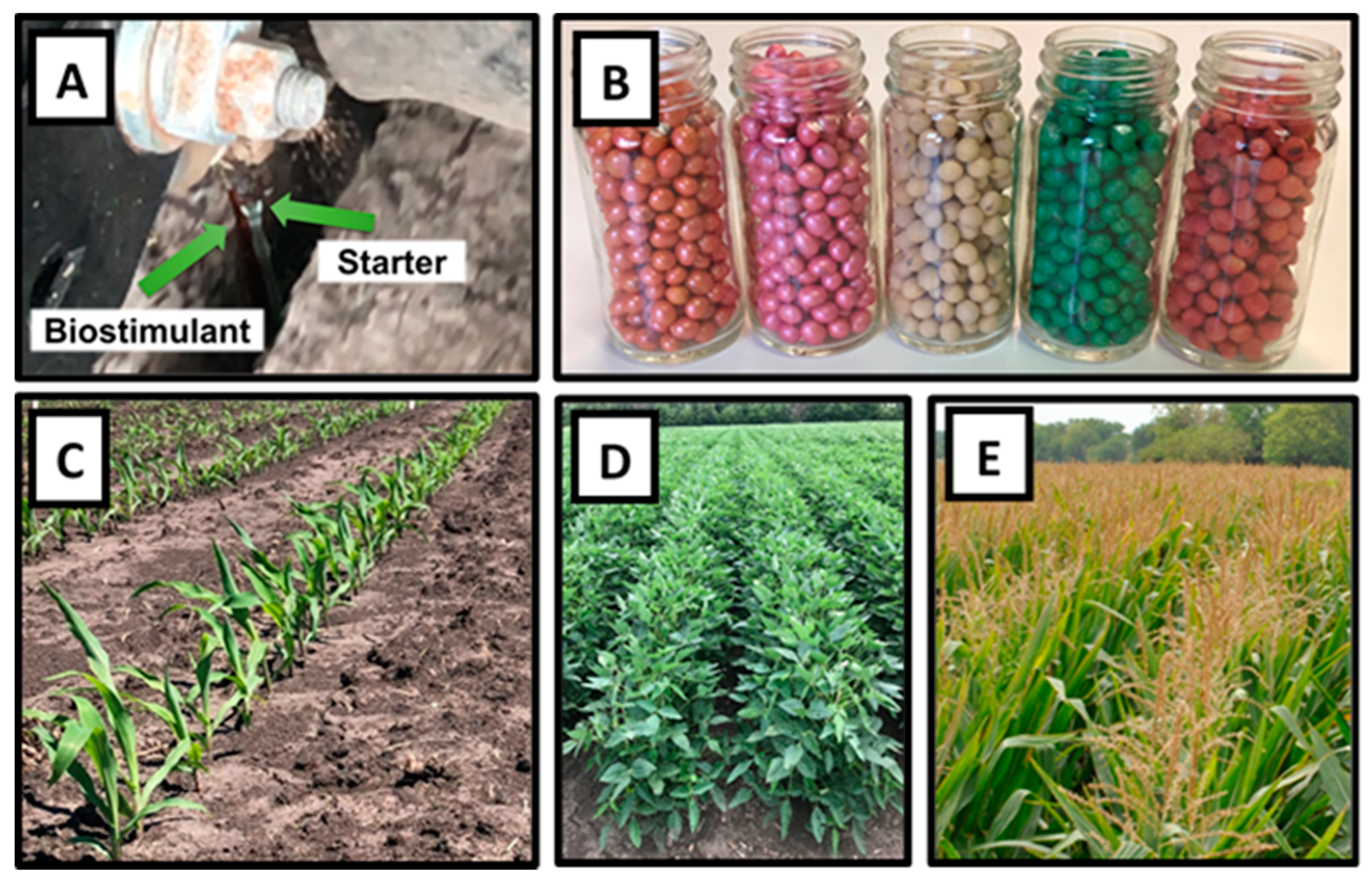
Plant biostimulants are specialty products used to increase crop production and are quickly becoming common in the agricultural seed and chemical marketplace. Unlike traditional crop inputs, such as fertilizers or pesticides, biostimulants are unique in that a single product may have multiple avenues for influencing crop growth and development based on both the timing and the placement of application. This review presents a summary of the current status and descriptions of plant biostimulants with available literature on their uses in the row crop production of maize (Zea mays L.), soybean (Glycine max (L.) Merr.), wheat (Triticum aestivum), and other major crop species. Biostimulants have much potential to improve crop production through enhanced yields, grain quality, and increased sustainability of agronomic production systems, particularly in relation to nutrient management. However, there is great variability in the efficacy of biostimulants and a limited understanding of the mechanisms responsible in field-tested scenarios where differences are observed. These unknown mechanisms may align with the recognized soil health indicators, providing opportunities for unrealized biostimulant potential beyond crop growth and development. This review aims to identify the predominant types of crop biostimulants, the known understandings of their modes of action, and examples of their current field efficacy with an outlook for their future.