2026-01-29 コペンハーゲン大学(UCPH)
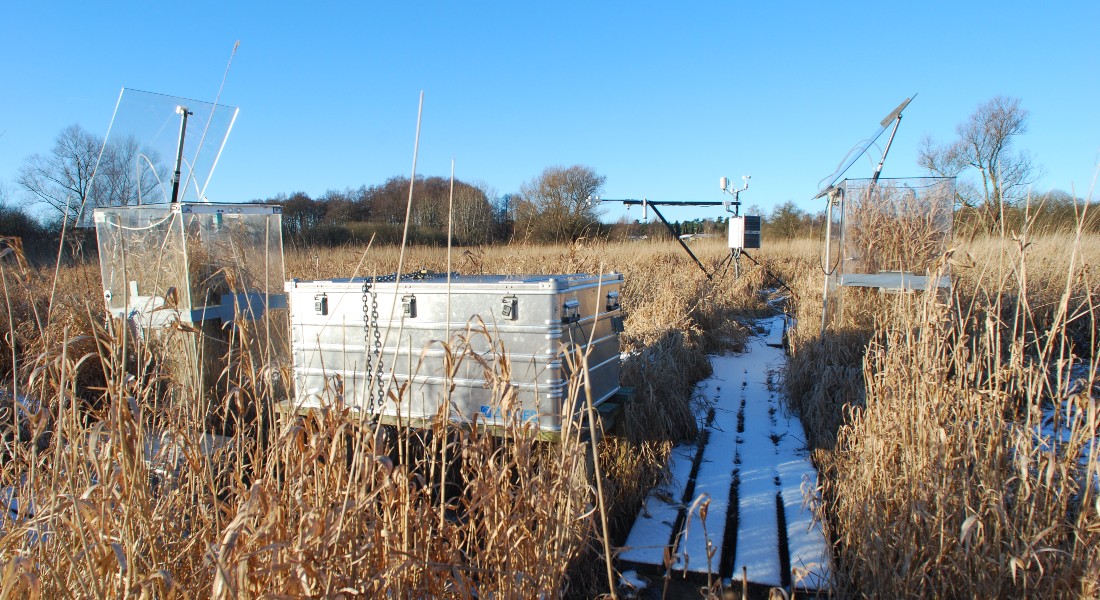
New knowledge is based on measurements and modeling in Maglemosen, a wetland located 20 kilometers north of Copenhagen, which has been undisturbed for more than 100 years and in many ways represents a typical Danish wetland with peat soils. Photo: Bo Elberling
<関連情報>
- https://news.ku.dk/all_news/2026/01/wetlands-do-not-need-to-be-flooded-to-provide-the-greatest-climate-benefit/
- https://www.nature.com/articles/s43247-025-03163-7
最適化された湿地再湿潤戦略は、地下水位の変動に対するメタン、二酸化炭素、酸素の反応を制御できる Optimized wetland rewetting strategies can control methane, carbon dioxide, and oxygen responses to water table fluctuations
Bingqian Zhao,Wenxin Zhang,Peiyan Wang,Adrian Gustafson,Christian J. Jørgensen & Bo Elberling
Communications Earth & Environment Published:09 January 2026
DOI:https://doi.org/10.1038/s43247-025-03163-7
We are providing an unedited version of this manuscript to give early access to its findings. Before final publication, the manuscript will undergo further editing. Please note there may be errors present which affect the content, and all legal disclaimers apply.
Abstract
Rewetting is widely promoted as a climate mitigation strategy to preserve soil carbon in drained wetlands, although rewetting may enhance methane production and corresponding emissions. The increase in methane emissions following rewetting might be underestimated without considering near-surface methane oxidation under a fluctuating water table. Here, we refined the methane module in Lund-Potsdam-Jena General Ecosystem Simulator with high-affinity methane oxidation and oxygen parameterization involving water table fluctuations. During 2007-2023, the Danish temperate wetland site functioned as a carbon dioxide sink (−41 gC-CO2m-2yr⁻1) and a methane source (0.71 gC-CH4m⁻2yr⁻1), with significant declines in seasonal amplitudes of methane flux, net ecosystem exchange, and gross primary productivity. Scenario analysis shows maintaining a stable water table at 9 cm depth offers the optimal trade-off between carbon sequestration and methane release. Our findings reduce the uncertainty in wetland methane estimates under climate change and highlight the importance of site-specific rewetting strategies to optimize mitigation efforts.