
2026-01-07 エディンバラ大学
<関連情報>
- https://www.ed.ac.uk/news/horned-dinosaurs-roamed-prehistoric-europe-study-shows
- https://www.nature.com/articles/s41586-025-09897-w
白亜紀後期ヨーロッパにおける角竜類恐竜の隠れた多様性 A hidden diversity of ceratopsian dinosaurs in Late Cretaceous Europe
Susannah C. R. Maidment,Richard J. Butler,Stephen L. Brusatte,Luke E. Meade,Felix J. Augustin,Zoltán Csiki-Sava & Attila Ősi
Nature Published:07 January 2026
DOI:https://doi.org/10.1038/s41586-025-09897-w
Abstract
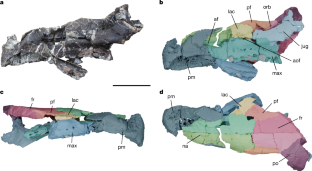
Late Cretaceous Europe was an archipelago with a dinosaur fauna characterized by island effects such as low diversity, relictualism and insular dwarfism1. Its dinosaur communities include a unique mix of groups with typical Laurasian or Gondwanan affinities and distinctive endemics1. Chief among the latter are rhabdodontids, considered to be early-branching iguanodontians characterized by unusual dental and postcranial features and known from abundant but very incomplete fossil remains2,3. By contrast, unequivocal evidence of horned dinosaurs (ceratopsians) is puzzlingly absent4, despite their ubiquitous occurrence in contemporary ecosystems of Asia and North America. Ajkaceratops from the Late Cretaceous of Hungary was described as the first definite ceratopsian from Europe5, but this identification has been strongly disputed4. Here we describe new material of Ajkaceratops and conduct phylogenetic analyses that support its ceratopsian affinities. Our results unexpectedly demonstrate that some ‘rhabdodontid’ taxa are not, in fact, iguanodontians but actually ceratopsians. This suggests a substantial but previously hidden diversity and evolutionary history of European horned dinosaurs, and co-occurrence of iguanodontians and ceratopsians indicates greater similarity than previously appreciated to other Laurasian ecosystems. Our results challenge conventional understanding of ornithischian dinosaur evolution and indicate the need for a fundamental re-evaluation of the Late Cretaceous herbivorous dinosaur assemblages of Europe.

